Monthly Archives: May 2021

QUESTIONS AND ANSWERS ABOUT THE TENTATIVE AGREEMENT BETWEEN AFT AND SMCCD

  • When will the contract go into effect?If we ratify (in our electronic ratification vote May 3rd through 6th), the Board will vote on approving the contract at their meeting on May 12th. If they approve it, it will immediately go into effect.
  • If we ratify, will negotiations begin on another contract soon?Yes, the current contract will expire June 30, 2022, so the idea would be to start working towards the next contract in the Fall by surveying faculty on their needs and priorities. We would then “sunshine” (publicly share) what we want to negotiate, then start negotiating late Fall 2021 or early Spring 2022.
  • What is the schedule for raises?2019-2020: 3.44%
    2020-2021: 5.68% (compounding with the previous year’s raise for a total of 9.32%)
    2021-2022: additional raise to be determined once the San Mateo County property tax assessment for Fiscal Year 2020-2021 is known.Adjunct instructional faculty will get an additional 4% for 2020-2021, plus the District will add $1.5 million to the adjunct instructional schedule in 2021-2022.
  • When will we know the percentage raise for all faculty for 2021-2022?We will know in the summer. The fiscal year ends at the end of June, and then it takes the District a couple of weeks to figure everything out. Our raise will be determined by a formula that uses the property tax assessment.
  • How will the pay scale and retro pay work?There will be retroactive pay going back to the beginning of 2019-2020.
  • Will there be interest on the back pay?
    Unfortunately, no, just the back pay itself.
  • What about overload? Is there also retro pay for that?Yes, for anything faculty have worked since the beginning of 2019-2020.
  • Will overload get the special raises for adjunct instructors? What about non-instructional adjuncts—will they get these raises?Overload and non-instructional adjuncts will get the raises all faculty get, but not the special raises for instructional adjuncts.
  • When will faculty first see the raises? What about the retro pay?The District has said that if we ratify the contract and they approve it at their meeting on May 12th, we will see the raises on May paychecks. We don’t know yet about the timing of the retro pay but will be in touch with faculty as soon as we have more information.
  • What about pensions and retroactive contributions?If 2019-2020 or 2020-2021 is one of the years used to calculate your benefit payment (either your highest year or one of your three highest, depending on how many years of service you have), the benefit amount will be recalculated based on the new, increased salary. District payroll reports pay changes to CalPERS and CalSTRS every month so they can recalculate.
  • What about health benefits? Are they going up?Yes. For full-time faculty, we are going to have a $50 increase to the per-month cap. This is a one-time increase.For part-time faculty, there will be an increase of $600 in the semesterly medical stipend each January 1st of the contract. So the stipend will be $2105 per semester effective Jan. 1, 2020; $2705 per semester effective Jan. 1, 2021; and $3305 per semester Jan. 1, 2022.
  • Are health benefits subject to retro pay as well?Yes. We are figuring out the logistics for retro pay for the part-timer medical reimbursement, since part-timers generally have to submit documentation that they’ve spent the money in order to get the reimbursement. We will be in touch with more details once we have them.
  • Is there going to be a new MOU that’s going to be in effect for the next academic year?Since the pandemic started, we’ve been negotiating an MOU for each new semester; we just surveyed membership around their needs for the Summer/Fall 2021 MOU and will be negotiating this soon.
  • I have heard there are going to be more steps and columns added to the adjunct instructional schedule. What about summer salary scales? Are there going to be new steps here?We don’t have separate salary schedules for summer—for full-timers, this would be the overload schedule, for adjuncts, the salary schedules are the same as in the fall and spring semesters. There will be new steps and columns starting in 2022-2023 only for instructional part-timers, so the first summer when instructional adjuncts will be paid on this new salary schedule will be Summer 2023.
  • What about the Discipline and Investigations article?This article sets forth a clear process and protections (like notification requirements) for faculty under investigation. In the past, we had no set process or protections, so faculty sometimes didn’t even know what they were being investigated or disciplined for, and the process was wholly up to the investigator. You can read more about the process and protections in Article 24 of the Tentative Agreement document.
  • Do we know anything about HOW they will implement the Workload pilot project for the fall? Or is that all TBD still?Because most of instruction will be remote in Fall 2021, we have pushed the first year of the two-year pilot back to 2022-2023.
  • Will the workload plan apply to part-timers?No, it’s for full-timers only. Our position is that part-timers shouldn’t do any work they don’t get paid for. Our hope, though, is that the workload plan might help us standardize part-time pay for committee and service work: as it is, part-time pay for service is often determined on a case-by-case basis.
  • When will the pilot points system be open for negotiation?In Spring 2024.
  • What happens if we don’t do all the points expected in the workload point program? Could we be fired or docked pay?If faculty are evaluated, that could go into the dean’s assessment of non-primary duties. However, at this point there are no clear consequences of what would happen if faculty don’t do enough points. The initial direction of the District was to take a very punitive approach, and we were able to push back and take that aspect out of the pilot program.
  • Are the points per semester or per year?Anything that extends the entire year, you do for the entire year to get the points. Anything that doesn’t take the entire year, you get the points for doing it as long as it lasts.
  • What about high-demand activities that don’t get points in the workload grid? Things like being principal investigator on a grant, or a counselor serving on the CRM task force?Other activities can be added or included if agreed upon by the faculty member and their dean, as we understand that not every service task will fit into the descriptions included in the points grid. If there isn’t agreement between a faculty member and their dean, there is a District-wide committee that can be appealed to.
  • What if you’re assigned some new duty in the middle of the year? Can extra points carry over?The pilot is only for two years, so if you do more points in the first year, you can bank them for the second year. Otherwise you can get paid for the actual hours spent on the excess points. Plans can also be adjusted mid-year—you could talk to your dean about deleting some other activities to offset the new, excess activities.
  • For counselors: what is the rule regarding whether meetings should be in prof time or out of prof time?Meetings part of the Professional Responsibilities Plan for the workload piece cannot be during prof time: the Professional Responsibilities Plan is meant to be something counselors complete beyond counseling time and prof time. Other meetings can be taken during prof time.
  • Is immunization and vaccination addressed? Or is the contract even the place to address that?There is nothing about vaccinations in our contract. That would be a topic for discussion for a future MOU.

May 2021 Advocate: Faculty Focus: Rod Daus-Magbual

Faculty Focus

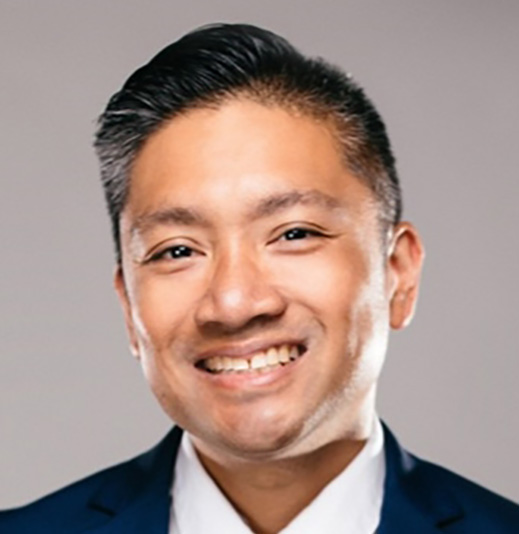
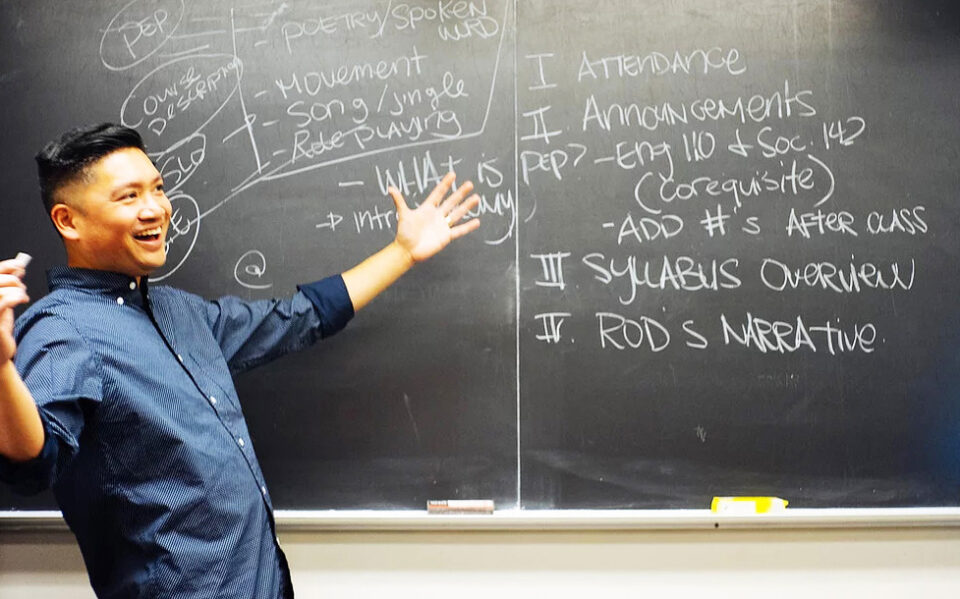
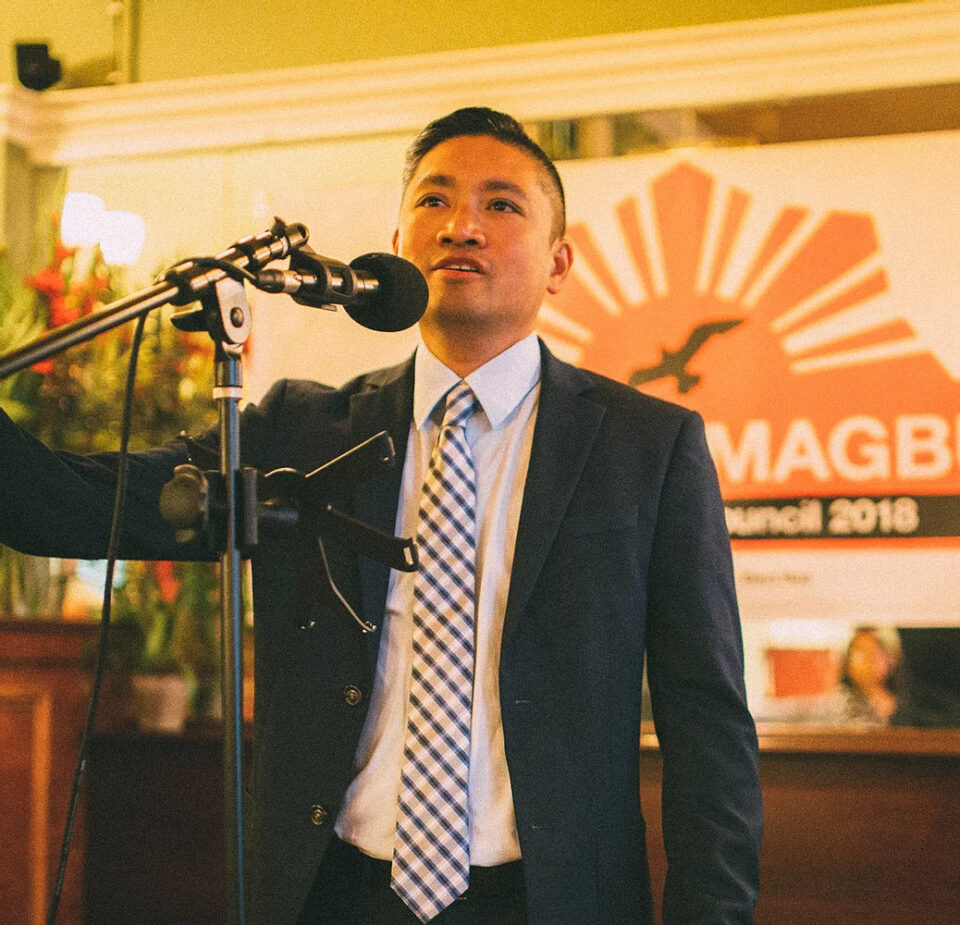
Rod Daus-Magbual: Working for social justice in the classroom and community

by Eric Brenner, Advocate Editor

“Faculty Focus” is an occasional Advocate feature that highlights the unique work and accomplishments of our members.

Dr. Rod Daus-Magbual began teaching Filipino Studies in the Kababayan program at Skyline College in the Fall of 2004 and very quickly decided “This is where I want to be!” He had met Kababayan Program Coordinator, Liza Erpelo, at a Filipino-American education conference shortly before he started teaching his first Skyline classes and, as he continued to teach in the program, he and Liza worked together to build the Kababayan program. Before he started at Skyline, Rod was Director of Curriculum and Program at Pin@y Educational Partnerships (PEP), a service-learning program in which graduate and undergraduate students from San Francisco State (SFSU) and surrounding universities receive an opportunity to teach critical Filipina/x/o American studies and develop skills in the practice of culturally relevant & responsive pedagogy, lesson planning and teaching. PEP’s pedagogical orientation aligned well with the Kababayan program’s instructional focus on the Filipina/x/o and Filipina/x/o American cultural experience.

Building a Skyline to PEP to grad school “pipeline”

While Rod has continued to teach as an adjunct professor at Skyline, he has also continued to work at PEP, where he became Executive Director in 2018. With his PEP connections, Rod started recruiting Skyline students who were transferring to SFSU into the PEP program and, as he put it, “a really cool pipeline was happening.” Students would go through the Kababayan program at Skyline, then transfer to SFSU and teach in the PEP program, and then some would go to graduate school in Ethnic Studies or Counseling or other related programs. Some have even come back to work at Skyline.
Growing up in SoCal

Rod’s parents were part of the generation of the post 1965 Filipino immigration to the U.S. and he grew up in Southern California, first in Long Beach, which had a large Filipino community, and then Riverside for his middle and high school years, where he was one of the only Asian kids in a class of predominantly white students.  A lot of his political perspectives developed during that time as he experienced anti-Asian racism, listened to the hip-hop music of the time and watched the police beating of Rodney King, the acquittal of the four officers involved and the ensuing L.A. riots. He personally encountered harassment by police and other authorities and saw friends and relatives assaulted and incarcerated. At the same time, during high school Rod became part of a UC Riverside student outreach program called Asian Pacific Student Programs. In that program he started to learn about Filipino American history by reading books like Carlos Bulosan’s America Is in the Heart, and he began working in coalitions with other students of color organizations, in particular to campaign against the anti-immigrant Proposition 187.

Rod went on to UC Riverside for his undergraduate education, where he continued working with Filipino student organizations and was very politically active. After graduating in 2000, he worked with youth of color and first-generation college students in student support services such as an Upward Bound program. He and his wife, Arlene Daus-Magbual, then both decided to get their Masters in Asian American Studies at SF State and they moved to Daly City. At SFSU, Rod met Dr. Allyson Tintiangco-Cubales, the founder of Pin@y Educational Partnerships, who recruited him to work in the PEP program while he completed his MA. In PEP, Rod learned to write curriculum, develop pedagogy and taught and mentored large numbers of working-class Filipino American high school students. That experience was a perfect preparation for him to become a teacher in the Kababayan program at Skyline.

From the classroom to Daly City politics

As Rod taught at Skyline and continued working with PEP, he saw many students struggling to afford to live and survive in the area as their families were forced to move to places like Stockton or Tracy or Sacramento, and he also heard the hardships of many undocumented students. Then, following the outcome of the 2016 Presidential election, he began to think: “Everything that I’m about, I’ve got to take what I’m doing in my classroom, and take it outside these four walls, and change the narrative.” That’s when he decided to get involved in Daly City politics. He’d completed an Ed.D. program in organizational leadership with a minor in international multicultural education in 2010 and he was encouraged by longtime Daly City councilmember and PEP Board member, Ray Buenaventura, to become a member of the Daly City Library Commission and the city Planning Commission.

In 2018, Rod successfully ran for City Council, and many of his former students were part of his campaign. One central focus of Rod’s campaign was engaging communities of color, especially the FilAm community, to get them to vote despite their large population and low voter turnout. He thought: “If we’re trying to maintain communities of color that have been here for 20 plus years, what are we doing to keep them here?” He wanted to “find ways to provide more services for people that are having a hard time with rent, more affordable housing and teacher and staff housing.”
Since joining the Council, Rod is proud to have helped pass affordable housing developments such as teacher and staff housing for Jefferson Elementary School District and Jefferson Unified High School District. Rod has also worked to develop more culturally responsive programs in Daly City, especially those reflecting the Filipino community.  He has worked with the Filipino Mental Health Initiative to help them secure a multi-million dollar state grant to establish a Filipino youth center.

Political future?

Along with these successes, Rod has occasionally felt his leadership position has come into conflict with his personal values and he hasn’t decided whether he will run for City Council again in 2022. He explained that “I share a lot of progressive and radical beliefs with a lot of my constituents, and some people will look at me and say that ‘You teach ethnic studies, but you’re not about it’… And those are the things that kind of hurt.” But then he reflected on the positives of what he’s been able to do: “I feel like we’ve been able to actually change the discourse on City Council, that we can actually now talk about race. That means it’s okay to talk about culture, that we can talk about police. We can talk about affordable housing that’s actually getting projects in the pipeline and money invested and shovels in the ground, that it’s happening.”

Connecting his political work back to his work with his students, Rod commented that “It’s really cool to see students not only learn about the struggle and survival stories of their people, understanding that that traumatic history was part of their history, but also to be part of and taking part politically in organizations that are doing work to address that generational trauma. That’s really fantastic.”

Teaching as an adjunct at Skyline

When asked about his experiences working as an adjunct at Skyline College, Rod reflected, “I’m not gonna lie, being an adjunct for this long has definitely been tough, but then I also appreciate those [in the union] who are fighting for me when I can’t be present.” Despite the difficulties of working as an adjunct faculty member, Rod expressed very positive feelings about teaching at Skyline: “At Skyline, I feel appreciated, I feel loved. I feel like I’m in a community… I’ve felt this sense of connection to Skyline more than I have in other institutions… There’s something at Skyline that has kept me here. And it’s those relationships that I have with… all these people that I’ve kind of grown up with.”

That Skyline community hopes that Dr. Rod Daus-Magbual will continue as a Skyline faculty member as well as continue his advocacy efforts in the larger community for many years to come.


May 2021 Advocate: In Memoriam: Rich Yurman

In Memoriam

Rich Yurman,
Retired Skyline Professor of English, Creative Writing & Algebra, 1937-2021

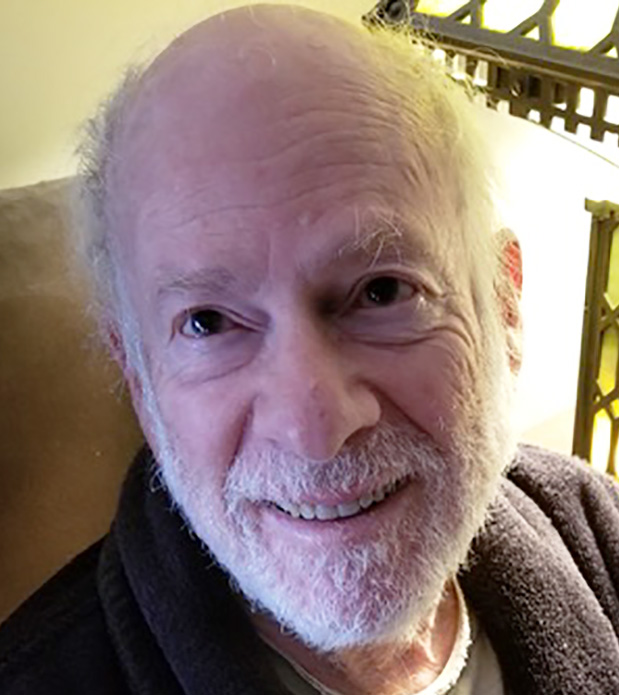
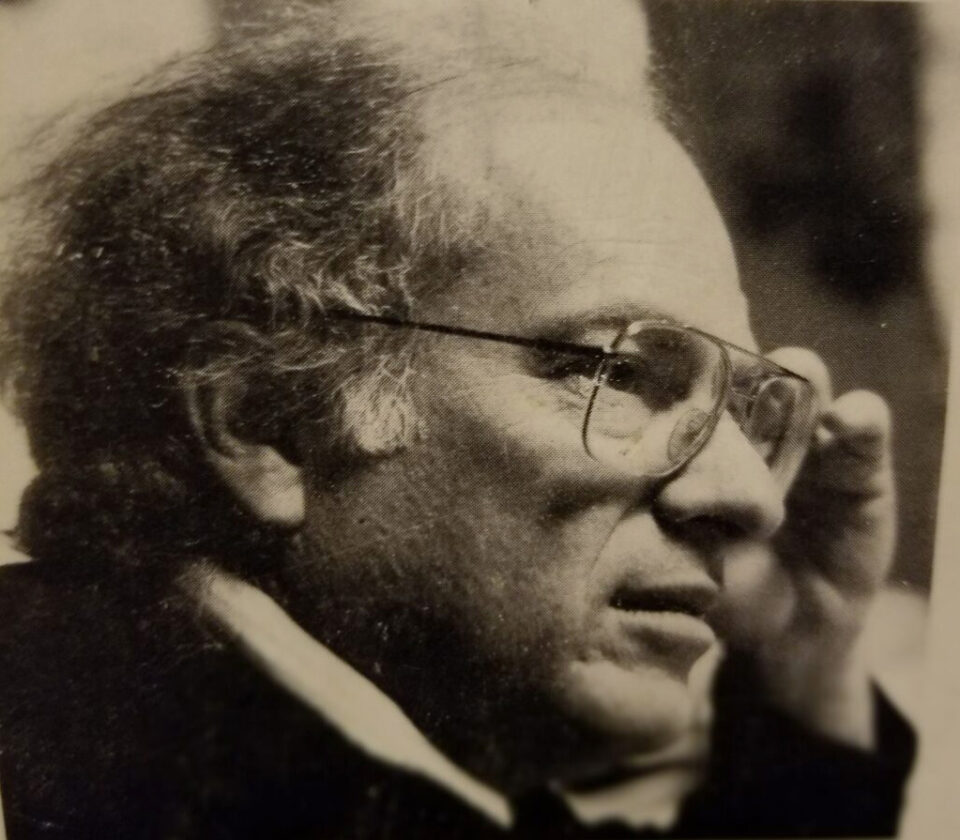
Rich Yurman passed away in his sleep at the end of January 2020. Rich taught at Skyline from the early 1970’s into the 1990’s and was beloved by his students and his colleagues for his humor, generosity, and understated braininess.  Rich started out at MIT as a math guy, and on a whim took a poetry class that detonated his life path. He’d found his true passion and became a poet and teacher of literature and writing. When asked the typical question, “So what do you do?” Rich would invariably answer, “I’m a poet”.

Rich grew up in Manhattan and Queens. After graduating from M.I.T. and Boston U., he lived in Seattle, Honolulu, and for many years, San Francisco, and then moved to Oakland to live with his life-partner, Clo. He retired from Skyline College in 1993 after directing the creative writing program for over twenty years and teaching English, Algebra and Creative Writing. Each spring, Rich worked with student editors to publish Skyline’s literary magazine, Talisman.


Two of Rich’s former creative writing students remember him

Rich Yurman was the first teacher I had who told me I was smart and talented, and when you’re a working-class kid, first in your family at college and not knowing what you’ll do with your life, hearing that is important. He read my poems and said they were good. I sat in his creative writing and Talisman production classes, deepened my love of language and literature and began to dream of a real life for myself. He encouraged me to transfer for a 4-year degree and celebrated my graduation from SF State with my family. He wrote letters of rec for my MFA and PHD applications, and every day when I step into my own community college classroom,  I think about how Rich’s mentoring saw me through a lot of tough times and helped me stay focused on my big dreams. He was always in my corner and always helped me to believe in myself. The last time I saw him was on a book tour at Beyond Baroque in LA. I took him out to eat and we just laughed and laughed together— he had a great sense of humor and was always full of good advice. The last advice he gave me was: “Teaching is important, but always remember you’re an artist and a poet with important things to say.” I loved him dearly and will never forget him.

Kirsten Ogden, Skyline class of 1992

Rich was the first teacher I had outside of that bubble of high school who made me feel like I belonged in college. By the time I met Rich I had already flunked out of CSM and didn’t think college was for me, but he knew better. In the environment Rich created, Rich helped me learn and know that I had a special voice— a creative voice that was worth exploring. As an Illustrator and writer, he welcomed me to the staff of Talisman and I did five covers of the book. That honor helped plant a seed that I could be an artist. Rich was also the first writer I had ever met. On top of being a professor, he practiced what he taught, and I’ll never forget how that experience of learning from a writer helped me learn how to read literature— because I had the author’s voice right there in class. He helped open up for me the world of the written word as something important and worthy of serious attention and study. I’ve since gone on to write and draw comics, showcase my fine art publicly, and write my own stories and see them published in anthologies. What Rich taught me was that art and storytelling were living things that we carry in our hearts so that we may connect to other hearts.

Mathew Digges

Rich maintained a rich and useful life outside of teaching. He wrote plays with the Red Balloon Theatre company and film reviews and cultural news for the socialist newsletter, Common Sense.  He headed-up the Media Alliance Central America Committee and volunteered with the organization, Men Overcoming Violence. When he retired from Skyline, he volunteered in an after-school tutoring program in San Francisco’s Sunset district, working one-to-one with elementary school students who he adored.

Rich published four collections of poetry:  Perfect Pair: He whispered/She shouted, Giraffe, Fascination Dolls, and More, and his poems appeared regularly in literary journals. Much of his writing is firmly rooted in the New York of his childhood, living with his parents and grandparents in Forest Hills. He leaves behind a loving partner, Clo, his son, Lee, daughter, Thea, and grandson, Jake, and many more family, friends, students and colleagues who miss him greatly.

A personal note

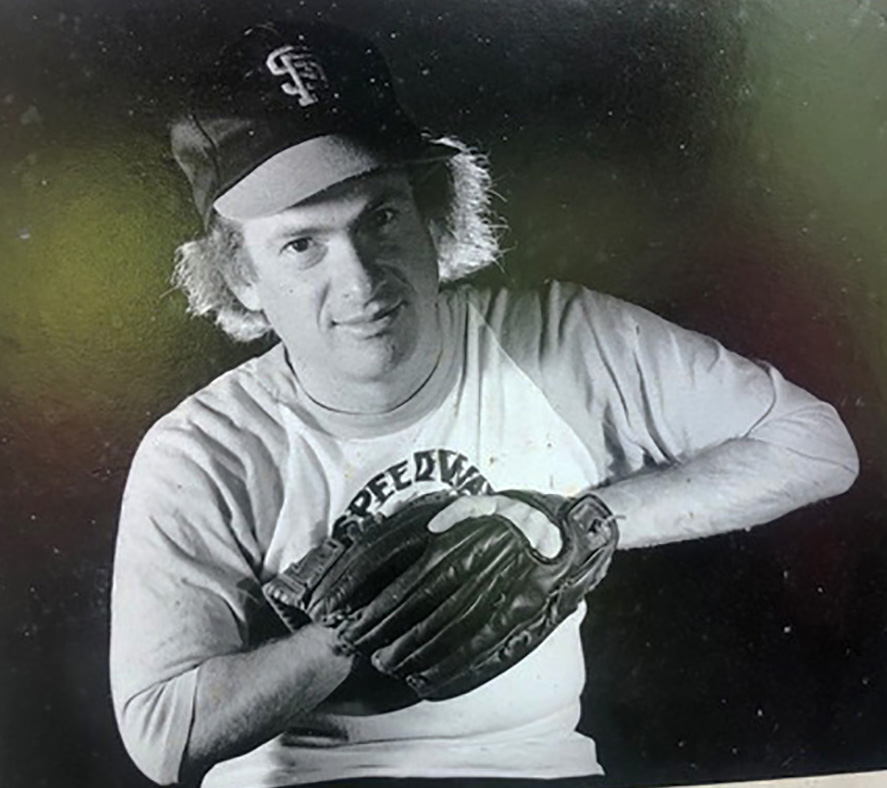
Rich was one of the first faculty members I met when I started teaching English part-time at Skyline in 1978-79.  We connected right off the bat – we had poetry, baseball, and radical politics in common and much more. One day after class I showed him a poem I was working on and with great tact and kindness he said, “I like it, but I’d lose that line. You don’t need it.” He was right. The poem was so much better without it.  That was the beginning of an over forty-year writing and editing partnership.  Rich and I read and responded to one another’s poems in the kitchens and living rooms of our houses and in cafes in San Francisco, Berkeley and Oakland.  We edited one another’s manuscripts and celebrated one another’s publications.  Neither of us could imagine putting our writing into the world without the other’s blessing.

When Rich decided to retire, he encouraged me to apply for a full-time job so I could take over the Skyline creative writing program and Talisman magazine.  The plan worked – I got the job and, with a lot of help and guidance from Rich, enjoyed some of the most meaningful and fulfilling work of my teaching career.  I can’t believe I won’t be able to show him this tribute to make sure I got it right.  He’s my inner reader, my biggest fan, my kind and wonderful friend.

A memorial is planned for June 2nd, Rich’s birthday, at a baseball field in San Francisco.  For more details and to read some of Rich’s poems, go to ryurman.org.

– Katharine Harer, Skyline English & Creative Writing professor & AFT 1493 Co-Vice President


May 2021 Advocate: Support for Adjuncts

Adjunct Faculty

New to SMCCD? Support for Part-time Faculty is Available.

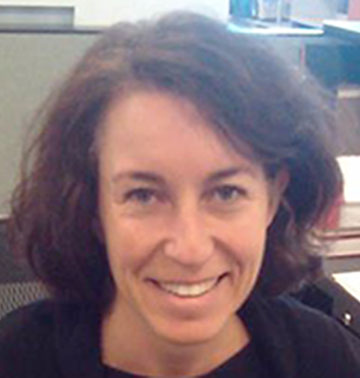
My name is Jessica Silver-Sharp and I’m writing to reach out to those of you hired since our campuses closed last March. Since our district doesn’t generally hold orientations for new part-time faculty, I’m available to fill you in on your adjunct rights and benefits, hear about your concerns, and get you up-to-date on the important work AFT is doing on behalf of our approximately 900 faculty union members.

As a part-time faculty librarian at Skyline College for almost 10 years (and your union Secretary), I know how it is to juggle jobs at several campuses. I encourage you to take the step of getting in touch and we’ll find some time that’s convenient to talk or Zoom, Tuesday through Saturday. I can also brief you on your campus library resources and library services for faculty that are sure to enhance your job. You can reach me here: silver-sharp@aft1493.org

Reminders for part-time faculty:

• Don’t forget to file for unemployment benefits

As an adjunct, you’re eligible for unemployment compensation benefits during the period between the regular term and summer school and during summer break, unless you are working another job during this time or earning more than your unemployment grant would be. As soon as you give your last final exam this month, contact the Employment Development Department (EDD) office and file a claim, or reactivate the one you have.

When applying, tell them about all your jobs, since  your benefit is based on all your income over the previous year. If an interview is scheduled, when they ask if you currently have a job to go back to, answer: “Not with reasonable assurance. I only have a tentative assignment contingent on enrollment, funding and program needs.” This is important: Do not tell them that you have an assignment for next semester or you will be disqualified. According to the Cervisi decision of the State Court of Appeals (and the Ed. Code), part-timers, as a class, do not have “reasonable assurance” of a job and hence are eligible for benefits between terms. If questioned further, mention the Cervisi case.

For new claims there’s a one-week waiting period before benefits start, so don’t delay. While the EDD has definitely struggled this year, I encourage you not to give up. If you have questions or are denied benefits for any reason, contact Marianne Kaletzky in the AFT office (kaletzky@aft1493.org) as soon as possible and the union will advise you on how to file an appeal. Don’t be reluctant to file. This is your right, not charity!

Deadline for health reimbursement: June 15

Don’t miss the June 15 deadline to apply for your Spring semester reimbursement of up to $1505 for employee-incurred health benefit premium costs if you qualify by working 40% or more of a full-time load for SMCCD. Complete the Part-Time Faculty Medical Reimbursement Application, provide proof of medical plan coverage and premium payments, and submit the application to George Sampior, Jr. (Human Resources) at: sampiorg@smccd.edu.

• Flex Day pay issues?

Confused about Flex Days? You’re not alone. Part-time faculty are not obligated to attend. However, if you participated but were not paid, I can assist you with both documents you’ll submit, the Flex Day Reporting Form and the Adjunct faculty timesheet. This paperwork is also due on June 15.

I look forward to hearing from you.  -Jessica <silver-sharp@aft1493.org>

May 2021 Advocate: Summer-Fall 2021 MOU Survey

AFT 1493 Faculty Survey: Summer-Fall 2021 MOU

Class size reductions, tech support and work-from-home stipends are priorities as mostly remote instruction continues

by Marianne Kaletzky, AFT 1493 Executive Secretary

Now that AFT and SMCCD have reached a Tentative Agreement for a multiyear contract, our Local is preparing to negotiate a Memorandum of Understanding (MOU) governing work under Covid conditions in Summer and Fall 2021. During these terms, instruction will mostly remain remote; however, more courses will be held in person, by agreement of individual faculty members, than during Fall 2020 or Spring 2021.

AFT surveyed SMCCD faculty with a focus on two questions:

1) how could the existing MOU be improved and,

2) for faculty who will teach in-person during Summer and/or Fall 2021, what do they need to teach safely and effectively?

We launched the survey Tuesday, April 20th, with a deadline of Friday, April 30th. 137 faculty members responded to the survey, of whom about 63% were full-timers and about 47% were adjuncts. For the first question, asking how the current MOU could be improved, a number of respondents asked for class size reductions so that they could more effectively support students. Many faculty also discussed their desire for more comprehensive technical support and the need for an increased work-from-home stipend to cover additional expenses incurred by teaching remotely.

Class size reductions a top priority

“I really want to see a class size reduction across the board–even for English composition,” wrote one faculty member who focused on class size. “This past year has been an absolute slog, for faculty and for students. It’s demoralizing to not have the time to devote to my students to help them succeed.”

Others echoed this theme, with one saying the current MOU could be improved with “a lower cap on class size”; a second writing, “Reduce class size when faculty request it”; and a third saying, “We need smaller class size in order to adequately teach our students. For synchronous instruction via Zoom: it takes longer and it is more cumbersome to do activities during which students interact among them (compared to in-person). For all classes: individually following-up with and supporting students take longer than when we were on campus.”

The current MOU sets forth a process for individual faculty to request class size reductions from their deans; however, there is no guarantee the dean will approve the request, and faculty must initiate the process. AFT and District Academic Senate are currently conducting a separate survey to gauge faculty interest in developing a process to give faculty a role in setting class caps, which would remain in effect beyond the Covid MOUs.

More IT support

Other faculty mentioned the need for additional tech support for both instructors and students. “We need IT help via phone/chatline/video-sharing for my students and for instructors who are NOT using a school computer; not just specific Zoom or Canvas problems, but help for students for instance, trying to figure out how to make a pdf or how to ‘draw’ using an MS Word program. They have computer trouble submitting assignments and I do not always know how to help,” wrote one faculty member.

Increase the stipend

Finally, a number of faculty said that the current work-from-home stipend, though helpful, was inadequate to the actual expenses they incurred working remotely. The work-from-home stipend is currently $100 per month for full-timers, with a pro-rated percentage for part-timers. “I really appreciated the $100 stipend, since I’ve had to buy a LOT of furniture and electronic equipment to adapt to teaching from home,” one respondent said. “However, since there was nothing like this in the fall — when I had to make most of my purchases, it didn’t cover much.” Another wrote, “First, $100 is not enough. 2nd, Part-timers should be getting the same amount as full-timers.” A third echoed the need for a better stipend for part-timers, writing, “$100 monthly stipend for adjuncts too. Wifi is expensive.”

A number of faculty members also said that the current provisions were serving their needs well, with responses like, “Can’t think of any! These look great!”; “Keep the same provisions please!”; and “These are good. I especially appreciate the extra $100 for expenses, since I am purchasing materials and resources for my work at home.”

Needs for those returning to in-person teaching

The second survey question asked faculty who will return to in-person teaching this Summer and Fall what provisions they need to teach safely and effectively. Here, a number of faculty expressed their concern that buildings might not have adequate air circulation, with one writing, “Air circulation/filtering in classrooms. I have taught in bldg. 14 for years. No cooling, no air circulation, very stuffy, perfect breeding ground for virus.”

Faculty also mentioned the need for clear masking rules, physical distance between students, free masks and hand sanitizer, a system for making sure classrooms are cleaned and disinfected, a plan of action and communication if an individual tests positive for Covid, and personnel tasked specifically with ensuring compliance with Covid-related guidelines. On the last subject, multiple respondents said faculty should not be the primary people responsible for enforcing restrictions, with one writing, “I don’t want the responsibility to police students. Admin/staff handle PPE of classrooms and labs, mask protocol, temp check and/or other issues.”

Vaccination concerns

Finally, a number of faculty also discussed vaccinations. Some expressed their support for vaccination requirements. “If vaccines receive full approval (not just emergency use), a requirement for EVERYONE (students and employees) who must be on campus to be vaccinated,” wrote one respondent. “Students need to be vaccinated,” wrote another. “Requiring proof of vaccination to attend in person,” said a third. Other faculty voiced concerns about the possibility of vaccination requirements, with one writing, “I’m concerned that I will be forced to get a vaccine in order to be able to come back on campus to teach,” and another saying “UC and CSU have mandated vaccinations for all, however they are allowing religious and personal exemptions. Does our agreement do the same or are we working on an MOU about this? If we are going to start making immunization requirements for faculty or students then please ensure that not only medical exemptions are permitted but that personal and religious exemptions are permitted.”

Our AFT negotiating team—comprised of Chief Negotiator Joaquín Rivera, Negotiator Monica Malamud, and Executive Secretary Marianne Kaletzky—will let members know when we have scheduled dates for negotiating the Summer/Fall 2021 MOU with the District. We will keep members updated throughout the negotiations with details of our and the District’s proposals