Monthly Archives: May 2021

May 2021 Advocate: Faculty Survey: Vaccinated?

AFT 1493 Faculty Survey: Who’s vaccinated?

AFT 1493 vaccine survey reveals more than 90% of members have received at least one dose of a Covid vaccine

by Marianne Kaletzky, AFT 1493 Executive Secretary

Earlier this month, our Local took a survey of SMCCD faculty with the intention of determining whether our members might need help accessing appointments to get a Covid vaccine. The survey was sent out by AFT Campus Chairs on Thursday, April 15th, with a deadline of Monday, April 19th. Despite our short turnaround time, we were happy to see a very high response rate: out of about 880 current faculty, 387, or 44%, completed the survey.

Of those 387 SMCCD faculty members:

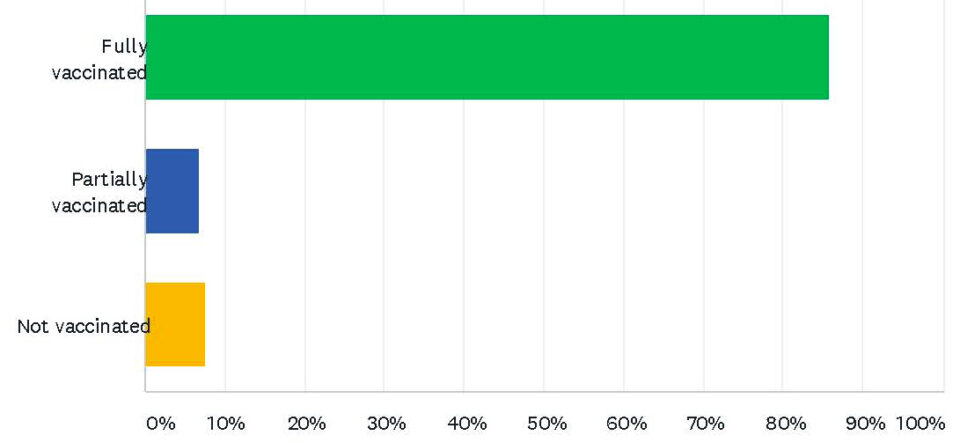
  • 330 (85.7%) said they were fully vaccinated against Covid-19.
  • 26 (6.8%) said they were partially vaccinated.
  • 29 (7.5%) said they had not been vaccinated.
  • 2 skipped the question.

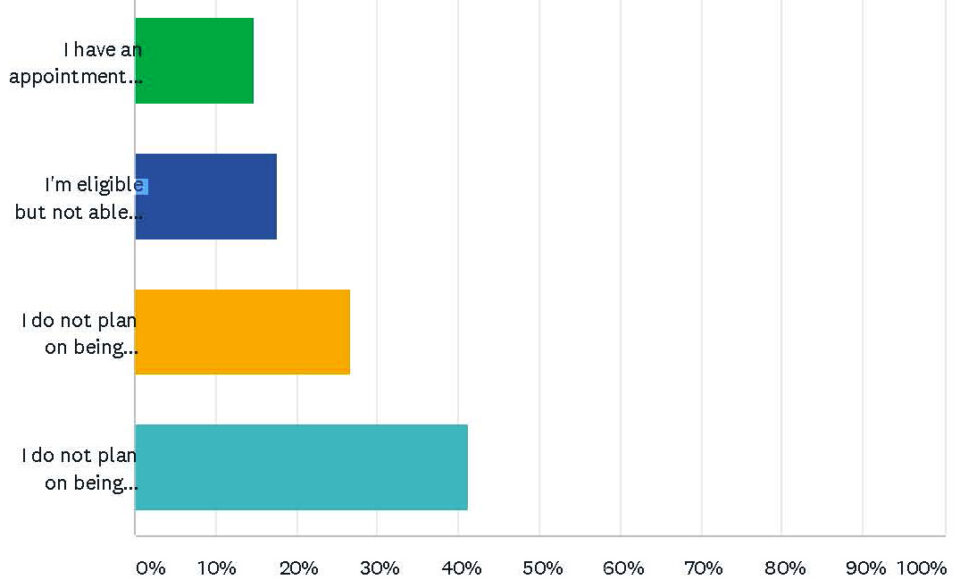
34 faculty answered the second question, which asked faculty who had not received at least one dose of a Covid vaccine what the reason was. (Only 29 faculty had not been vaccinated, but some faculty who had been partially vaccinated answered this question as well.) Of these 34:

  • 5 (14.7%) said they had an appointment already scheduled.
  • 6 (17.7%) said they were not able to schedule an appointment.
  • 9 (26.5%) said they did not plan to be vaccinated for health reasons.
  • 14 (41.2%) said they did not plan to be vaccinated for other reasons.
The primary intention of the survey was to assist our Local’s newly formed Solidarity Committee in determining how best to support members who might want to receive a vaccine but have been unable to schedule an appointment. Based on the survey data, the vast majority of members who want to receive a vaccine have been able to secure an appointment. In fact, our Local’s percentage of members who have either been vaccinated or have an appointment—92%—exceeds the percentage of educators nationally with a vaccine or appointment, according to a survey commissioned by our nationwide union, the American Federation of Teachers. That survey, whose data AFT released April 6th, showed 81% of educators with either a vaccine or appointment; however, that percentage may have risen significantly since the data was collected.

Both the San Mateo Labor Council and our statewide union, the California Federation of Teachers, have resources to make sure educators who want vaccines are able to receive them, including providing appointment sign-up codes. SMCCD faculty who want an appointment but have not been able to make one should reach out to AFT Executive Secretary Marianne Kaletzky.

The AFT 1493 Solidarity Committee was formed to address members’ unmet needs in housing, healthcare, and other areas. Members include Kolo Wamba, Monica Malamud, Katharine Harer, and Jessica Silver-Sharp.

May 2021 Advocate: SURJ San Mateo

Social justice organizing in our communities

Showing Up for Racial Justice, San Mateo:
People with privilege organizing against systemic racism

by David Usher, SURJ San Mateo member

Are you outraged by the repeated police killings, the criminalization, mass incarceration, the economic and political disenfranchisement of BIPOC (Black, Indigenous, People of Color)?  Do you want to join with others and do something about it? Do you want to be part of the effort to dismantle the deep-seated systemic racism which has historically infected all society? Are you willing to look honestly at your own racist complicity, attitudes and prejudices?  If so, we invite you to join us in SURJ San Mateo.
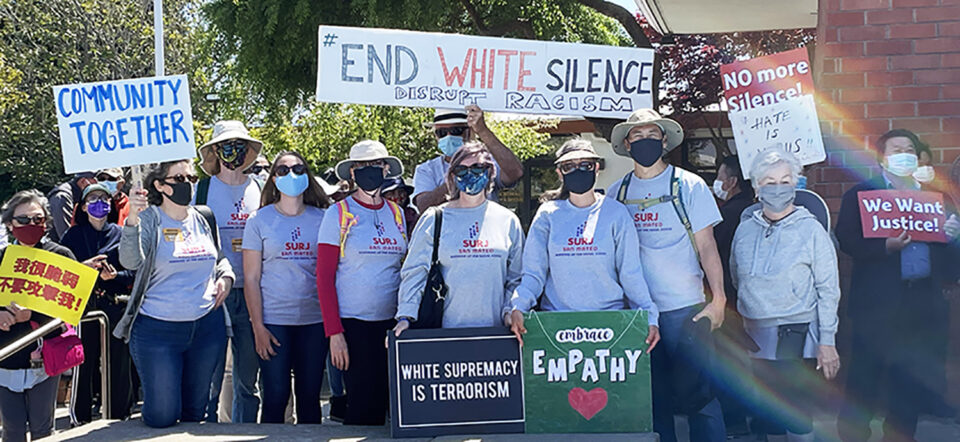
Showing Up for Racial Justice (SURJ) was formed in 2009 in response to the violent racist rhetoric and actions following the election of Barack Obama.  SURJ is designed particularly for white people and others of privilege to address the root causes and public manifestations of white supremacy culture, not only the police killings, mass incarceration and economic injustices, but also their own unwitting complicity in systemic racism.  The national SURJ organization grew steadily over the following decade, and by 2020 there were more than a hundred local chapters.  The summer of 2020 saw a national outpouring of outrage against yet more police killings, and as part of that outrage, SURJ saw a great many new local chapters being formed across the country.  SURJ San Mateo is one such new chapter.

Basic Principles

All SURJ chapters consent to a number of basic principles.

  1. The recognition that the work of dismantling racism is also for white people, not only for BIPOC.
  2. The work must be done in partnership with BIPOC led organizations, from which SURJ takes its lead, doing what is asked.
  3. The sharing of economic privilege caused by systemic racism is an integral part of the work, so at least 50% of all money raised is shared with BIPOC partners.
  4. The inward work of examining one’s own history, attitudes and prejudices is equally important.

Actions

Since its formation last summer, SURJ San Mateo has partnered with Faith in Action Bay Area (FIABA,) a BIPOC led organization working with congregations and other community groups on issues of immigration, voting and housing rights.  We have written letters, made phone calls and sent emails as FIABA has requested.  Recently we have also partnered with San Mateo County Coalition for Immigration Rights (SMCCIR) to work against deportations, and Peninsula Anti Racism Coalition (PARC), particularly in the campaign for trained professionals and not the police to respond to 911 calls when someone is having a mental health crisis.


SURJ San Mateo members at Anti-Asian Hate protest in Millbrae on April 17

Meetings

During lockdown SURJ San Mateo has met regularly online on the second Tuesday of each month.  Each meeting is likely to include several action items – an opportunity for self-growth and learning, an outreach on behalf of a current campaign, time to deepen our relationships with each other, and an invitation to share financial support.  We also have study groups to read books or watch movies together to advance our knowledge and understanding, and work action groups to advance our several current campaigns. There have also been public witness gatherings and the offering of testimony to county supervisors and city councilors.

Join

If you are feeling frustrated and angry about the state of the world and how white privilege shows up, please know there is a group of people waiting to join forces with you. Join SURJ San Mateo!

For more information or to join SURJ San Mateo, see:

May 2021 Advocate: Gender Oppression Listening Space

Anti-Oppression Committee

All faculty, staff and students are invited to the Gender Oppression Listening Space:
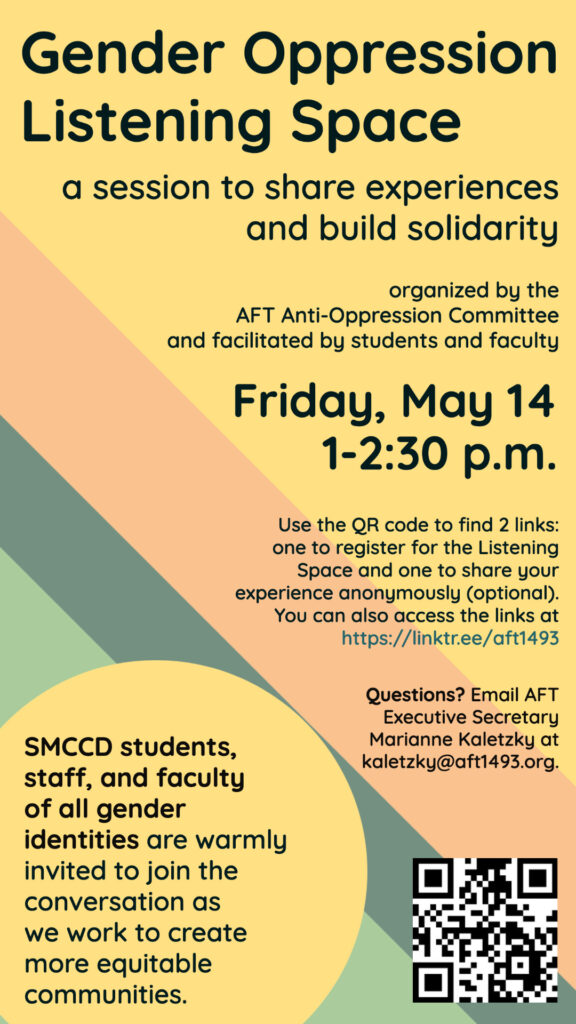
A session to share experiences and build solidarity: Friday, May 14, 1 – 2:30 p.m.

by Rika Yonemura-Fabian, Skyline Chapter co-chair, AFT anti-oppression committee co-lead

Many female-identifying faculty and students experience gender aggression, discrimination and harassment in classrooms and in our interactions with our colleagues, administrators and peers. Yet it is often extremely challenging to bring justice to gender-based aggression. As a union representative, I have been in conversation with many female colleagues around their experiences of being intimidated, belittled, and marginalized because of their gender in everyday contexts of our work. I have also represented some faculty members in investigations of their complaints of gender discrimination.

When a complainant is a faculty member, the case goes to the District HR office. In the process, I have seen complainants face multiple obstacles, always, without an exception, of a similar nature: the complainant has to endure a long, time-consuming process of filing their complaints and documenting the incidents, all the while reliving the trauma of the incidents; the District office takes a long time to respond to the complaint, and the complainant self-doubts if she is making something up out of nothing and causing trouble for other people; the District refuses to take meaningful actions to intervene, and the complainant walks away with a sense of powerlessness; there is a constant fear of retaliation which a complainant has to endure, throughout the process. In some cases, the complainant herself was asked to justify and explain how the incident constituted gender harassment. To sum up, individual investigation processes can be very isolating, and in themselves, traumatizing. Although we try to do our best, support from union representatives won’t be able to entirely solve this very common symptom of victim-blaming perpetuated by the oppressive gendered system itself.

The AFT anti-oppression committee, a collective of faculty and students within AFT, wants to create a communal and supportive space for our female-identifying and non-binary colleagues and students to build a network of support. With this as our goal, we are organizing a Gender Oppression Listening Space: a session to share experiences and build solidarity on May 14th from 1pm – 2:30pm. The event is designed to serve as a container to provide safety and trust to talk about women’s and female-identifying people’s experiences, including gender aggressions and gender oppression on campus, and the everyday struggles of gendered labor patterns, including the burden from care work and emotional work that often falls on women. Facilitated by an AFT member and a student organizer, the space will connect faculty and students so that we can start building a network of mentorship.

All faculty, classified staff, and students are welcome to join. Register at this link. In this first event, we welcome male-identifying members to listen and learn about gendered experiences from other participants. If you have any questions, please direct it to Rika Yonemura at fabian@aft1493.org or Marianne Kaletzky at kaletzky@aft1493.org.

May 2021 Advocate: Faculty ratify new contract

Faculty ratify new three-year contract!
97% vote Yes!

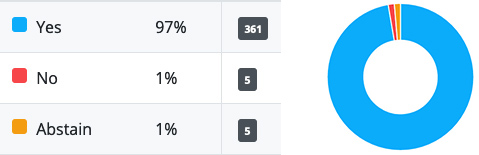
In voting from Monday, May 3 through Thursday, May 6, District faculty overwhelmingly ratified the Tentative Agreement for a new multiyear contract.  371 members, or 40% of our 930-person bargaining unit, voted in the ratification election. Of these, 361 people (97%) voted YES to ratify the contract. Five people (1%) voted no, and five people (1%) abstained.

The Tentative Agreement will now be brought before the SMCCCD Board of Trustees next Wednesday, May 12, for their approval, and if approved by the Board, it will become the contract governing faculty working in the District from the beginning of July 2019 through the end of June 2022.

May 2021 Advocate: Faculty’s right to speak to the press

Defending faculty’s rights

Skyline President revises message on media policy after AFT points out
faculty’s right to speak to press without the approval of PIO

Skyline College President, Melissa Moreno, sent a message to the Skyline community on May 3 that corrected a previous message she had sent out on the subject of role of the Marketing, Communications, and Public Relations (MCPR) Department regarding faculty’s right to speak to the press. The earlier message, sent in March, repeated an inaccurate message sent out by the MCPR in 2014 which attempted to “protect” the college’s “brand and image” by restricting faculty comments to reporters and the media.

After that 2014 MCPR message, AFT asked its attorney, Robert Bezemek, to clarify faculty’s constitutional and statutory rights to respond directly to the media. Bezemek wrote an Advocate article on the subject at that time that explained that the MCPR 2014 message “coerces compliance, and discourages or ‘chills” faculty free speech rights. Following President Moreno’s March message on the media policy, AFT Skyline Chapter Co-Chair, Rika Yonemura, met with Dr. Moreno and shared the history and critique of Skyline’s overreaching policy.  AFT appreciates that Dr. Moreno promptly wrote her revised message acknowledging that her March message had “overstepped” and she cited the 2014 Bezemek article, recommending to faculty and staff that it is “worth a read.”

While pointing out the exceptional rare occasions, “as when someone has been engaged to speak on behalf of the college to express the college’s ‘official’ position,” Bezemek’s article concludes with the following statement:

Faculty, students and even Board members cannot be required nor can they be expected by their employer to obtain permission or approval of their words when they decide to talk to the media about their college. The Constitution demands this recognition by public colleges.