Monthly Archives: October 2022

October-November 2022 Advocate: Faculty Focus: Sue Broxholm

Faculty focus

Sue Broxholm, Skyline Math Professor, advocates for the end of the “Two-Tier system” that divides full-time and part-time faculty

Interview by Marianne Kaletzky, AFT 1493 Executive Secretary

Sue Broxholm has been teaching Math as a part-time instructor at Skyline College for over 20 years. In addition to teaching, Sue has been a long-time advocate and organizer for equitable pay, benefits and working conditions for part-time faculty.  In the interview below, Sue explains what the “Two-Tier system” is and why she has worked against it, as well as sharing a little bit about herself, including a surprise personal connection to Albert Einstein.
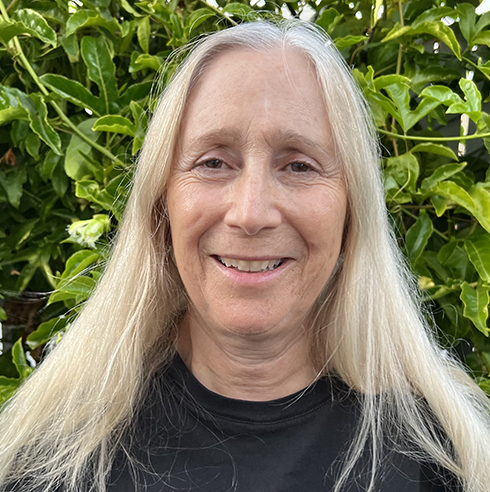
Sue Broxholm

You’ve done a lot of advocacy to draw attention to the inequity of something called the “Two-Tier system” in higher education. What is the two-tier system? And what are some of the problems with it?

The two-tier labor system creates two different pay and benefit structures (or lack thereof) for existing and future employees.  Workers oppose the policy for several reasons, including that it creates disparities among workers for essentially doing the same job which can hurt morale and create animosity. At the community college level, two-tier refers to the division between full-time/tenure and part-time/adjunct faculty labor.

In all sorts of workplaces, from Nabisco and Kellogg to John Deere and Kaiser Permanente, employees have been united in their opposition to a two-tier benefit and wage system.  It’s time for community colleges to join the rest of the country in achieving normal equity for their workers.

Additionally, at California community colleges there is no real pathway to the upper tier.  Sadly, in our district there is not a strong record of promoting from within.  According to San Mateo District’s Human Resources department, only about 60% of full-time positions are filled internally.  Thus, we have many people of proven worth who have been stuck in lower positions for years.  After a while many adjuncts don’t even bother applying for full-time positions anymore.  In fact, there is no guarantee of an interview for someone who has been working in the district for years with good reviews when a full-time position opens up.  It’s unfair, terrible for morale, and a waste of human capital.


Tell us about some of the work you’ve done to achieve equity for part-timers, either in our union or elsewhere.

I have been involved in union meetings in which part-time issues were at the forefront.  I’ve also talked to administrators about the problems with the two-tier system and how important it is to get rid of it.  I’ve also gone to conferences put on by other faculty organizations such as Faculty Association of California Community Colleges (FACCC) and California Federation of Teachers (CFT).  Additionally, I have been serving on the Executive Committee of California Part-time Faculty Association (CPFA).

I have made several trips to Sacramento with colleagues and friends or by myself, to hand out fliers to people who work in the Capitol, legislators, and to the public about abolishing the two-tier labor system for community college faculty.  I have been heartened by how the public enthusiastically agrees with this goal!
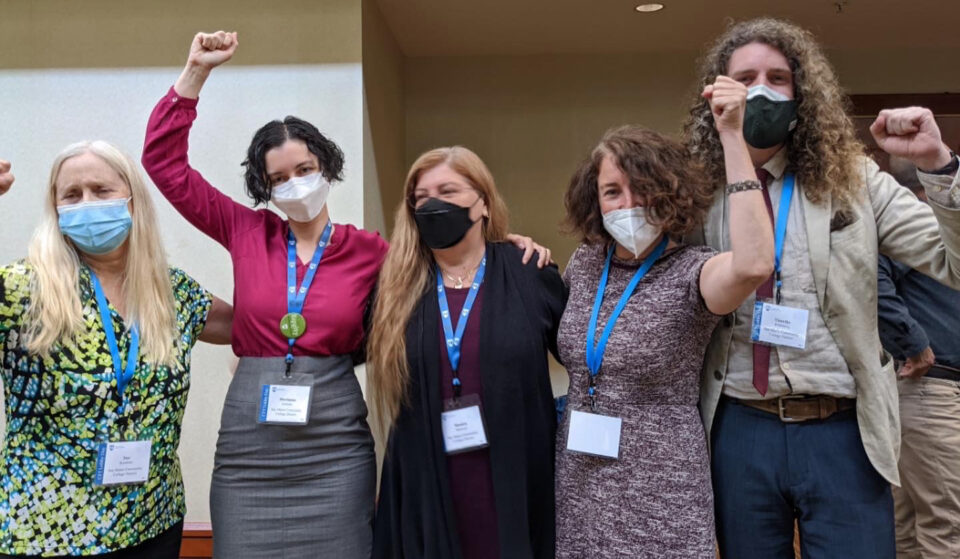
Sue (at left above) joins other AFT 1493 members (l. to r., Marianne Kaletzky, Monica Malamud, Jessica Silver-Sharp and Timothy Rottenberg) at a CFT Lobby Day in Sacramento, during which they met with legislators to advocate for part-time issues–including asking them to support the $200 million for part-time healthcare–which was eventually passed!


According to a report by the American Academy of University Professors, as of Fall 2019, 63% percent of faculty members in higher ed across the country were contingent faculty (adjuncts and/or part-timers), compared to just 37% tenured or on the tenure track. In our District, more than half of faculty are part-timers. Colleges and universities have become so dependent on adjuncts who have unstable, low-paying appointments, and the two-tier system has become so deeply entrenched. Is there really a way out? Are there any good models of institutions that have abolished the two-tier system?

Yes, there is a way out which would require a conversion process towards the Vancouver model.

The union contract at Vancouver Community College (VCC) in Vancouver, British Columbia, managed to transform VCC to a fully pro-rata, one-tier system: only one pay scale, not two, with equal access to benefits and entitlements such as vacation, sick leave, pensions and professional development.  In their career, faculty usually go through only one hiring process at the beginning.  They are mentored and evaluated for usually about two years before they become “regularized”.  “Regular” status is a form of job security similar to tenure. The faculty labor organization exhibited at VCC is commonly referred to as the “Vancouver Model”.

One-tier educational systems are not unheard of in this country.  In fact, we already have a one-tier system.  It is K-12 which has been working well for a very long time.


How did you come to be a community college math teacher? How long have you been at Skyline, and where else have you taught?

I didn’t choose this profession; this profession chose me.  I couldn’t get away from the numbers!  When I was a child, I played school with my little sister, and I was her teacher.  She later grew up and became an engineer, so I guess I did OK with her.  After high school I worked at various service jobs and office jobs as well as at the post office.  At each job, I would somehow find a quantitative aspect to it.

Later I earned a bachelor’s degree at Berkeley in Statistics and a master’s degree in Mathematics at San Francisco State.  A friend of mine got me into tutoring and then I went on to teach at Skyline College.  I’ve been teaching at Skyline as an adjunct over twenty years.

Like many adjuncts, because of the 67% cap on workload, I’ve become a Freeway Flyer.  In addition to teaching at Skyline College, I teach at College of Alameda, and often at Merritt College and Laney College.


What have been your favorite parts of teaching and working at Skyline?

I love working with the students, encouraging them and looking for ways to make the material more accessible to them.  I believe the presentation of material and encouragement are both vitally important in teaching.

At Skyline, I really appreciate the Professional Development benefits which are the best I’ve ever seen in community colleges.  I’ve been able to go to some great conferences, hear some interesting ideas, sharpen my teaching skills, and meet other community college math teachers from all over the US and Canada.  I love getting their different perspectives on mathematics education.Additionally, as an extra bonus my husband also works at Skyline College in the Automotive Department.  It’s great to have someone to talk to about things we encounter at school.


What would you change about Skyline if you could?

 Get rid of the two-tier system and go to the Vancouver model!  It would be a perfect way for Skyline to show to faculty, students, and the public its commitment to inclusion and equity.  Skyline could be a beacon for the state and the rest of the country, and the “Skyline model” could become America’s answer to the Canadian “Vancouver model.”  I would love that!


Finally, what is something that most of your colleagues might not know about you?

My father knew Albert Einstein!  My father went to Princeton to get a Ph.D. in Physics and ended up taking classes from Albert Einstein.  My father had a picture of himself attending a lecture given by Einstein.  He always kept it on his desk when he was alive and now, I keep it on my desk!

In the picture below, my father is the one with the black tie pointing to Einstein’s head.

Ed. Note: Not many people know that Albert Einstein was a member of the American Federation of Teachers.  When he joined AFT Local 552 as a charter member in 1938: Einstein stated:

“I consider it important, indeed urgently necessary, for intellectual workers to get together, both to protect their own economic status and, also generally speaking, to secure their influence in the political field.” 


October-November 2022 Advocate: Negotiations at a standstill

Negotiations Update

Negotiations at a standstill, with District refusing to move on many proposals

by Marianne Kaletzky, AFT 1493 Executive Secretary

Want a fair contract now?
RSVP today for our October 26th action to demand
healthcare for part-timers and paid parental leave


Very little progress in negotiations since last Spring!

AFT negotiators have been at work for many months now to negotiate a new, fairer contract to replace our most recent faculty contract with SMCCCD, which expired at the end of June 2022. In February 2022 we submitted our initial proposals for the next contract to the District, and in March the District held a public hearing on their and our initial proposals, a process required by law and also known as “sunshining.” However, the District did not give us negotiating dates until May, and though we have been meeting regularly since then, we have not made much progress due to the District’s flat refusal to show any movement on our core non-economic demands. So far, AFT negotiators have presented proposals for:

  • A month of paid parental leave before new parents must use sick days or take leave at partial pay. This issue is especially important to newer hires who have not yet accrued many sick days. Faculty should not have to choose between spending time with newborns and earning a wage to support their growing family.
  • A clear disability accommodations process, including the requirement that the District give a status update on requests for accommodation within 30 days of receiving them.
  • A provision on remote work that gives all faculty the option to work up to 50% of their hours remotely, with an additional provision for counselors giving them the right to take at least half their counseling appointments remotely. Even with individual counselors on hybrid schedules, counseling departments are able to provide in-person availability for all students. And data from all three colleges shows that students continue to have a strong preference for remote counseling.

The District has failed to move on any of these proposals. While the District may not be willing to accept our initial proposals, we do want them to be taken seriously, and we hope that their negotiators will work with ours to find room for movement in both directions and arrive at a compromise acceptable to both parties. Instead, District negotiators have responded to AFT with counterproposal after counterproposal that simply reiterate the status quo, often giving no justification other than “we’re not interested in negotiating over that,” “that’s a management right we’re not interested in giving up,” or “that’s not a mandatory subject of bargaining.” (Mandatory subjects of bargaining are those–including wages, benefits, and working hours–that an employer must negotiate over, but nothing prevents SMCCCD from negotiating on other subjects, except those explicitly designated as illegal.)

AFT has proposed medical, dental & vision benefits for part-time faculty equivalent to those offered to full-timers

In addition, on September 20th AFT presented a proposal to give part-timers with loads of 40% or more access to medical, dental, and vision benefits equivalent to those offered to full-timers. This proposal would almost certainly be self-funding: in response to lobbying by CFT members including members of our Local, Governor Newsom and the legislature have allocated $200 million to provide healthcare to part-timers at California Community Colleges, and have laid out program points to allow districts to get reimbursed up to 100% of their costs by the state as long as they provide quality, affordable healthcare to their part-timers. If SMCCCD agrees to our proposal, it would save the District hundreds of thousands of dollars currently used to pay part-time healthcare reimbursement stipends, which could instead partly be used to pay for part-time dental and vision coverage. The District stands to save money while giving part-timers a significant improvement over the current stipend program, which falls short of covering many part-timers’ total healthcare costs, does not allow part-timers to cover dependents, does not cover dental or vision, and requires part-timers to pay out of pocket and wait until the end of the semester for reimbursement. The District has not offered any response to our proposal beyond saying they want to cost it out, and they have not given us any negotiating dates since September 20th.

Come to the Oct. 26th Board meeting to support healthcare for part-timers and paid parental leave

We have not yet arrived at compensation or full-time medical benefits, as economic issues are generally negotiated last. But it’s clear that we’ll need to put serious pressure on the Board of Trustees (who direct the District’s negotiating team) if we want to settle a fair contract in a reasonable amount of time.

On Wednesday, October 26th, we will be holding an action to demand a fair contract for all. Because it’s AFT’s Campus Equity Week, we will be focused on two key proposals that offer a more equitable workplace for faculty while allowing us to better support our students: healthcare for part-timers and paid parental leave. To support our case for paid parental leave, we are asking faculty to bring your families and community supporters, including children of all ages (we’ll have activities!) Join us on Wednesday, 10/26 at 5:15 at CSM Building 1 to eat pizza and make signs. We’ll then march to the District Office for the 6 p.m. meeting, where we’ll give the Board a visible demonstration of our member commitment to winning a fair contract, and support faculty and community speakers making public comments on our behalf. Can you join us? Please RSVP today to let us know:
https://bit.ly/AFTOctober26RSVP

October-November 2022 Advocate: Vote by November 8

Election recommendations

Don’t forget to vote in the general midterm elections: Vote by November 8

Two AFT 1493 members running in local elections &
SSF “Preschool for All” measure endorsed by our Local

Ballots for the midterm elections have already been sent out and now it’s time to make your decisions on races for state-wide and Congressional candidates, state ballot measures, state legislature and for local candidates and measures.

The last day to register to vote is October 24. Register to vote online here. Mailed ballots must be postmarked on or before November 8 and received by your county elections office no later than November 15. Personally delivered ballots must be delivered by close of polls on November 8 to your local polling place or a ballot drop-off box. Find your local polling place here. On November 8, polls are open: 7 am to 8 pm.

The California Federation of Teachers (CFT) has an online voter guide, called The Educators Choice (click here to view it), that gives you endorsements customized to your local ballot. Simply enter your home address. You can also check CFT endorsements here or download their endorsement sheet here.

AFT 1493 members running in North County elections

Two members of AFT 1493 are running in city council elections: Rod Daus-Magbual for Daly City City Council and Eddie Flores for South San Francisco City Council. Rod and Eddie are both faculty members at Skyline College. Rod teaches Ethnic Studies and Eddie teaches in the Hospitality and Tourism Management program. You can learn more about Rod and his campaign at his campaign website: https://www.roddausmagbual.com and you can read more background on Rod from a faculty perspective in The Advocate‘s Faculty Focus interview with him (from May 2021) here. Eddie’s campaign website is: https://www.eddiessf.com, but you can also learn more about Eddie and his campaign by reading The Advocate‘s interview with him here. Eddie’s campaign is holding open phonebanking every day from 4 – 8 pm. If you’d like to volunteer to join the phonebanking, please click here to fill out the sign-up form.

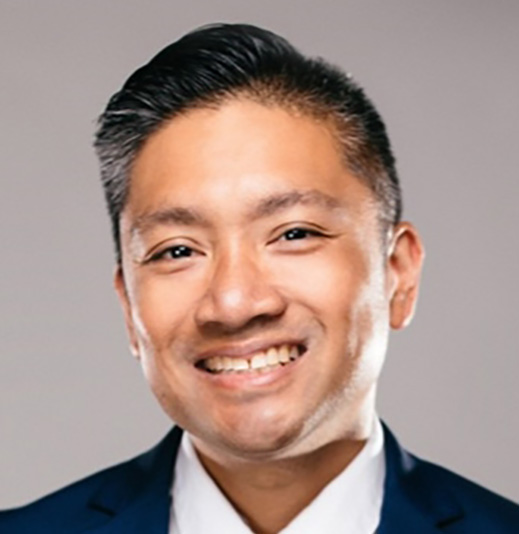
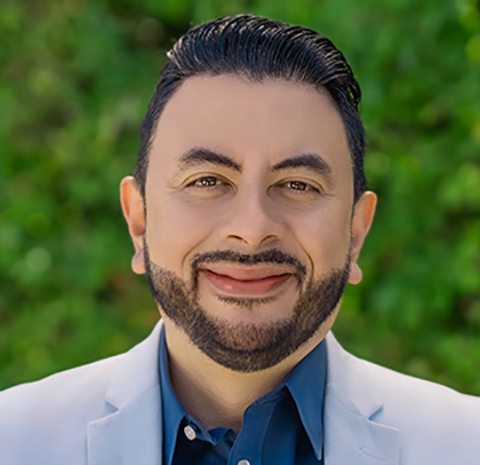
Rod Daus-Magbual  Eddie Flores


AFT 1493 has endorsed South San Francisco Measure DD to provide preschool for all SSF children and living wages for teachers

AFT 1493 has endorsed a local ballot measure in South San Francisco: Measure DD – “Preschool for All” because it is an especially important local measure that would provide free preschool for all children 2.5 to 5 years old in South City and would pay preschool teachers a real living wage. Members of AFT 1493 have been working on Measure DD’s grassroots campaign, first to get thousands of signatures from SSF residents to qualify the measure for the ballot and now to help to campaign for its passage.  To learn more about Measure DD in SSF or to volunteer to help out or donate, check out the campaign website at: http://ece4allssf.org.

 

October-November 2022 (Issue 46, Num. 2)

In this issue:

October-November 2022 Advocate: Eddie Flores, Skyline professor, candidate for SSF city council

November 8 Election

Eddie Flores, Skyline professor and AFT 1493 member, is running for South San Francisco City Council

Eddie Flores teaches in the Hospitality and Tourism Management program at Skyline College, is a member of AFT 1493 and is a candidate for the South San Francisco City Council who has been endorsed by the San Mateo County Labor Council. In the interview below, Eddie discusses his background as a Salvadoran immigrant and his experience working in community service and for social and labor justice. Eddie’s campaign is holding open phonebanking every day from 4 – 8 pm. If you’d like to volunteer to join the phonebanking, please click here to fill out the sign-up form.

Eddie Flores

Tell us a little bit about yourself and what your life was like up to the point you joined the SSF City Council.

I’ve been a lifelong advocate for children and families. I have over 20 years of progressive experience in public, private, non-profit, and educational arenas. Early on after college, I worked as a science aid teaching elementary school students and fought to ensure high quality childcare for school-aged children. I have a proven track record of being a collaborative leader. I’m a teacher, immigrant, former South San Francisco Parks and Recreation Commissioner and former South San Francisco Unified School District Board President, and have the great honor to currently serve as South San Francisco’s councilmember.

My family immigrated out of El Salvador when I was 7 to escape the civil war. Having seen my single mother work three jobs to make ends meet, I understand the struggles and sacrifices of our working-class and immigrant community. This combined with my passion to serve and being an advocate for those most vulnerable drove me to serve in the community that I grew up in, a community I love.

What made you want to be part of the Council, and why are you running to continue serving?

We made history last year, when I became South City’s first Salvadoran immigrant to serve on a city council in the history of San Mateo County and only the second Latino in the 120+yr history of our beautiful city. I was honored to have been selected from over 17 applicants to this role. As a council, I’m humbled to share that we have worked hard for our residents and I have hit the ground running from day one. I am running for South San Francisco’s District 5 to continue to bring a much needed voice and representation to this District. I am running because there is still much work to be done and I have the courage to fight to ensure that the quality of life for all of our residents is top priority. Yes, the work is just getting started and there is much more work that needs to be done.

SSF’s District 5 community has not received the resources it deserves and I am committed to addressing displacement and gentrification in District 5; continuing to work to make housing more affordable, bring new parks and green open spaces to Old Town and clean up Airport Blvd, including east of 101;  beautify Pecks Lot, and other areas that have been far neglected for way too long and create a safer Linden Avenue corridor with better lighting. Support investments and better access for Seniors and bring about strong mental health services and programs to our community, expand childcare and preschool access and services, address climate change and sustainability and support local community-based economic development.

What have been some of your proudest accomplishments and moments during your time on SSF City Council so far?

I have worked hard since the pandemic hit, to ensure that our vibrant downtown was not decimated. A place  that’s home to new business and residents, I’ve hit the ground running from day one on City Council to ensure there was help brought to our residents. Together in my first year on council:

  • We led the creation of a guaranteed basic income pilot program,
  • Passed a $5 Hazard Pay ordinance for our essential grocery store workers,
  • Secured over $100 million in affordable housing funds,
  • Passed strong environmental regulations for new buildings,
  • Voted & adopted Vision Zero to eliminate all traffic fatalities & severe injuries.

During this Pandemic, we brought immediate relief to our community by:

  • Creating a Shop Local free $40 gift card distribution program in partnership with our chamber of commerce
  • Created an initial pilot program to deter catalytic converter thefts, and backed it up with emergency ordinance declaring possession of such illegal in South City
  • Voted to support the final financing and opening of the new South San Francisco Caltrain Station,
  • Voted in favor of creating a new city commission on equity and public safety and Youth Commission
  • As well as created the award-winning: Every Kid Deserves a Free Bike Program.

This only happened because people from all over our community came together with a vision and firm belief that a better future was possible. While we have accomplished much over the past two years, there is still much work to be done!

You’ve been endorsed by the San Mateo County Labor Council, which represents labor unions across the county, and of course you’re a member of our local. What are your thoughts on being a union member? What do unions mean to you, your family, and your community in South San Francisco?

Being born in El Salvador and immigrating to this country at the age of 7 escaping the civil war in the 1980s, I have seen first hand the sacrifices of working families, and those that like many in my family, took on multiple lower-wage, blue-collar jobs to make a living. Having seen my single mother work three jobs to make ends meet in the hospitality industry, without union representation, left a profound impact on me, growing up. Early on, I became acutely aware of the struggles and sacrifices that my family members and others often endured without worker’s rights. Having had this unique lived experience, and perspective I see this endorsement through a different lens. The lens of representing and fighting for the people, and not for myself. I know that an endorsement and support of Labor means more than a vote of support for my campaign. It signifies that one of the most important and largest labor union groups of hardworking individuals and families, has my back, understands that they have a friend in me, and that each member knows they can reach out to me at any point and time. Through great wins and the possible challenges, it means that we are in it for the long run. It means that the membership of each local understands that I am deeply committed to continue to lift and amplify the voice of the membership, especially that of educators, and take on bold actions to fight for fair and equal rights, during my entire term of office and not only during campaign season. More than a vote of confidence, it is a vote of solidarity, bringing about a full circle moment for me, having a group of colleagues and advocates who know I will always work hard in South City and elsewhere to ensure that they are never forgotten or ignored. 

Tell us more about the hospitality program at Skyline. What do you train students to do, and what are your favorite parts of working there?

Skyline College’s Hospitality and Tourism program is a thriving program housed within the Business Hospitality and Tourism Management focuses on preparing students with the experience, commitment, and skills they need for management, marketing and operations within the hospitality and tourism service industry. I am skilled in training students to gain the necessary knowledge and skills required to manage and make intelligent business decisions within a food and beverage operation or department; with a focus on: standards determination; variable, semi-variable and fixed costs; the operating budget; income and cost control and menu pricing.My favorite part of working is the diversity and inclusion components and the ability to meet students where they are in every way, each day. 

What are your top two priorities to improve South San Francisco that you will put into practice if you’re elected to another term?

As a community, we are facing rising costs of living, skyrocketing rents, unjust evictions, displacement, drought and climate change, and more. I will make it my mission to fight to ensure that the quality of life for all of our residents is top priority, including by:

  • Address displacement and gentrification in District 5 and continue to work to make housing more affordable.
  • In addition I will work hard to bring new parks and green open spaces to the historic Old Town area of SSF and clean up Airport Blvd, including east of 101, beautify Pecks Lot, and other areas that have been far neglected for way too long and create a safer Linden Avenue corridor with better lighting.

Who can members or students reach out to if they want to volunteer for your campaign?

We have a growing grassroots campaign with great momentum from teachers, labor union members, community residents, small business owners and people from all walks of life and generations. Join us by visiting EddieSSF.com and sign up to volunteer!

Finally, what’s one thing most of your colleagues may not know about you?

I love coffee in every form and every kind and type. Take me out to coffee any day!