Monthly Archives: March 2025

Joaquin Rivera

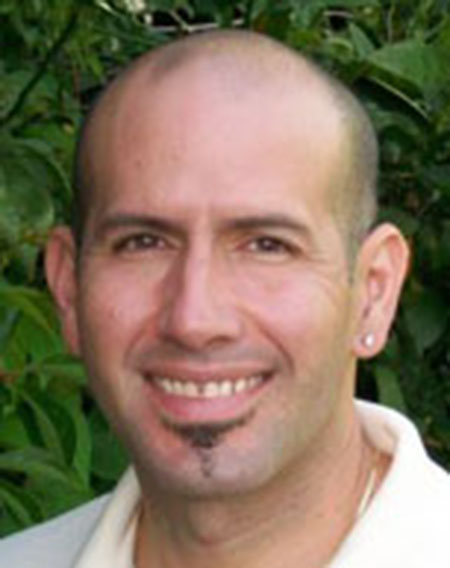
Congratulations to Joaquín Rivera on his retirement! 

Editor’s note: Long time AFT union leader and Skyline College Professor of Chemistry Joaquín Rivera concluded his service for our union and our college this January. Please stay tuned for a longer article about Joaquin’s significant accomplishments in the next edition of The Advocate. Here we present some brief words by his long time friend and union colleague Katharine Harer in his honor.

Joaquín Rivera, Chemistry Professor at Skyline College & AFT 1493 Past President, Vice President & Chief Negotiator

By Katharine Harer

I’ve worked with Joaquín in our faculty union since approximately 1995 – just about thirty years. When we first met, I was a rank-and-file member with a strong interest in getting involved in our union, and Joaquín was an up-and-coming young leader.  At one of the first few meetings I attended, the current union president and chief negotiator appeared to be “in bed” with the administration.  They were making deals with district administration without consulting with the Executive Committee of AFT, deals that weren’t in the best interest of faculty. Joaquín asked pointed questions of them, and I did too. They threw up their hands, announced they were leaving their position because we didn’t trust them, and walked out the door. AFT 1493 never saw them again.

Joaquín Rivera

As a result of that sudden loss of leadership, Joaquín and I stepped up as temporary Co-Presidents and we were later elected to a number of terms as Co-Presidents of the union. We also both served on the negotiating committee, Joaquín as Chief Negotiator and I as a “learner” indebted to Joaquín for teaching me the protocols and strategies of the art of negotiations.  

I’m an English and Creative Writing teacher, not a numbers person. I don’t remember how many terms we served together, but I do know how much our skills and backgrounds complemented one another.  Joaquín kept track of the numbers, had the memory of an elephant, and a great mind for tactics, while I took copious notes during negotiations, contributed to strategy sessions and carried out the majority of communications with members. Joaquín and I met often, as our buildings, 7 & 8 at Skyline, were adjoining. 

When a mentally unstable student began stalking me at my home, making middle of the night calls to me, and one day stood outside my office door screaming my name, Joaquín and I were inside in the middle of a union consultation. I called campus police to ask them to escort the student off campus. The student began hitting and kicking the campus policeman, and furniture in the outer office was flying.  Joaquín stayed with me the entire time, keeping me calm.  He was more than a union colleague.  Joaquín and I became good friends, in and out of school.  I attended his wedding to his husband, Joel, and continue to spend time with both of them.

Joaquín has given his wisdom, his vast experience and his countless skills to our union and to the betterment of faculty working conditions.  More than any one person I can think of, Joaquín Rivera has been a devoted and hard-working leader of AFT 1493. 


How Cal Poly Humboldt Students Activated Faculty to Stand Up for Freedom: A Conversation with Dr. Tony Silvaggio

How Cal Poly Humboldt Students Activated Faculty to Stand Up for Freedom: A Conversation with Dr. Tony Silvaggio

By Jessica Silver-Sharp

For more than a decade AFT1493 has proposed article language around academic freedom that our District has struck down. However, with recent, dramatic shifts in our political climate already underway with the reelection of President Trump, faculty are more concerned than ever about academic freedom and its close relative, campus free speech. In contract negotiations currently underway, our union will again demand strong language that would empower faculty and our union to submit grievances against infringements in academic freedom.

In this article, we briefly discuss an attack on student freedoms by our administration during Spring 2024 as well as the experiences of Cal Poly Humboldt students and faculty and their protests that made national news when The New York Times published “A Small Campus in the Redwoods Has the Nation’s Most Entrenched Protest.”


SMCCD Faculty Support for Students around Repressive Policies

While all three college Academic Senates were able to pass resolutions around the conflict in Gaza calling for immediate ceasefire (SEE College of San Mateo & Cañada College), when the Skyline College Governance Council (CGC) forwarded its resolution from the Academic Senate to President Orante for acceptance, he wrote to the CGC by email to reject the most critical parts of the resolution on the grounds that, “my full endorsement of the resolution would be contrary to our board policy on Academic Freedom.” 

Then, in May, the administration restricted student expression with new District commencement policies published on commencement websites that cited a “de-escalation first approach for non-violent behavior.” From AFT Co-President and Sociology/Social Justice Studies faculty Rika Yonemura Fabian to the Skyline CGC on May 22, 2024: 

“While the [college’s] policy states: “support[ing] students, staff, and faculty in nonviolent protests and demonstrations” is part of college’s philosophy, the  “de-escalation first” approach next described actually specifically prevents, rather than supports, the most common techniques used in “nonviolent protests” — including acts  as basic as holding up signs… Deescalation is a technique for violent protests; non-violent acts by definition are peaceful and do not require plans or language like this.” 

“This commencement plan language demonizes supporters of Palestine as actors of potential violence…and disruption despite…lack of precedence…This…language also aligns with the narratives of a racialized criminal justice system that profiles communities of color as disruptors of social order, and echoes the continuing dehumanization of Palestinians…” 

While Skyline College’s commencement webpage remains up as of this writing, policies resisted by faculty around protest protocols were eventually removed.


What can we learn from Cal Poly Humboldt?

As our union continues to fight for contractual language that would safeguard faculty’s rights to free expression, including academic freedom and the right to express political views outside of class, we looked to the experiences of Cal Poly Humboldt faculty and their students. This February, members of our AFT local met for a Zoom interview with sociology faculty member Dr. Tony Silvaggio, then Vice President of Cal Poly’s CFA faculty union, to see what we might learn from their at times harrowing experiences up north.


A Spirit of Civil Disobedience

We began by asking about academic freedom language that appears in the preamble of their faculty contract. We learned that faculty were less concerned by contract wording because of their outrage over student treatment by police, their strong tradition of civil disobedience rooted in the campuses long involvement in the radical environmental movement, and also the “activated” state of their faculty following their recent participation in the largest US faculty strike in history.

Dr. Silvaggio next described the turn of events at his campus, which began with an SOS text he received from a student protester explaining that a police officer was beating them — could he come to campus immediately? Although faculty had been banned from entering the occupied buildings, he was able to do so, and, with colleagues, managed to de-escalate violence being perpetrated by the police. 

Faculty-student support was further strengthened when the faculty union immediately organized a virtual Know Your Rights teach-in for students related to their freedom to protest as well as another similar workshop for staff and faculty. Dr. Silvaggio explained, 

“Faculty were activated as a result of student protests and the draconian response of our administration to that protest…it went counter to our culture. As a union we thought, if they’re going to do that to students, they’re going to do it to us. There’s that recognition..that we have to do something, so folks came out. It mobilized hundreds of faculty.” 

For faculty wanting to support students but not to protest themselves, the union also offered legal observer training: “What many of us did was become legal observers. That gave us the shield. ..It allowed us to be present and witness for our students when the cops came. One faculty member stayed on campus and got arrested, sent to jail…”

0

Activating and Defending Faculty & Students while also Challenging Management

Immediately following the student occupation of a campus building, the Cal Poly Humboldt administration shocked California by being the first US university to close campus and cancel all in-person instruction. Faculty were banned from campus for the remainder of the semester. In protest, many faculty returned to their offices to prepare to move instruction online. 

When one faculty member who had been arrested for protesting received a letter of reprimand and threat of suspension from the administration, the union called out the hypocrisy of the administration for having singled out the one faculty member for harsher treatment, by demanding at their Academic Senate meeting: “We were there [protesting], too! Where is our letter [of reprimand]?” Eventually the letter was withdrawn.

The union also continued to activate faculty by blasting out messages about next actions, speaking with the local press, and in April calling for a vote of no confidence in their university president Tom Jackson, who announced his resignation in July.


Fighting back against illegal policies

However, in August 2024, days before the Fall term was to begin and without any advance notice to faculty or administrators, the CSU Chancellor’s Office issued a new “time, place and manner” policy to severely restrict future campus protests. (Time, place, and manner refers to restrictions on when, where, and how people can express themselves). 

In response to that infringement on the academic freedom language in their contract, the union communicated with faculty to “Get ready [to protest]…!” This galvanized faculty and led to “standing room only” meetings with administrators. The union also filed a PERB charge violation against the University charging them with unfair labor practices. The Chancellor’s new policy on time, place and manner was then redacted for faculty but remains in effect for students. 

While the crackdowns and penalties have had an unfortunately chilling effect on the Cal Poly community, as has the onslaught of attacks on queer and undocumented communities by the Trump administration, students and faculty have continued to make good trouble.

An impromptu concert holding space for queer joy at Cal Poly, Humbolt

For example on February 6, the “Turning Point USA Cal Poly Humboldt chapter tabled on the quad, but was met with an impromptu concert holding space for queer joy. A marching band and dancers with flags took the space in front of the organization’s booth and started a dance party.” (Turning Point USA is an organization that advocates for far-right politics by forming college chapters).

Also, as part of an action campaign, the faculty union recently brought in an immigration lawyer to run a Know Your Rights session geared at supporting undocumented community members. The Academic Senate followed suit by sponsoring a related workshop for all employees. More than 30 faculty also joined a union-created “rapid response team” in preparation for campus visits by ICE and other potential emergencies. These actions have provided outlets for faculty to stay engaged, and have opened the door for them to speak out against a range of new attacks, including those against the LGBTQ community. 

While our three community colleges and Cal Poly Humboldt are very different types of institutions, we have seen at each that when faculty are aware of their rights, are organized and have a platform, and when they engage with students in their social justice struggles, they can score important victories in the fight for basic human rights for all. 

AFT 1493 faculty members wanting to observe and participate in our union’s upcoming fight for academic freedom in our contract are encouraged to get involved by signing up here. What else can SMCCD faculty do? Join your AFT1493 socials, drop in on membership meetings, and reach out to your AFT campus chapter chairs to get involved!  


Thank you to Dr. Silvaggio for providing his time and inspiration as well as to the following faculty who participated in the interview: Mustafa Popal, Katie Manbachi, Kolo Wamba, Michael Hoffman and Rika Yonemura Fabian. Special thanks as well to Elinor Westfold and Kolo Wamba for their much needed editing support.


Reflections on CFT’s Convention in San Diego

Reflections on CFT’s Convention in San Diego

By Mandy Lucas, AFT 1493 Organizer, Skyline College

Prior to the California Federation of Teacher’s 2025 convention, I didn’t know what to expect so I arrived with an open mind and the curiosity to learn more about our statewide union. There were over 350 people in attendance and the general sessions were filled with inspiring educators and union leaders from across the state who contributed to resolutions that benefit our students and communities, especially amidst current attacks on public education. Speakers such as Lorena Gonzalez (President of California Federation of Labor Unions) and Randi Weingarten (President of AFT) were a reminder that our power is in our union and organizing our communities to be united against attacks on public education, immigrants, unions, LGBTQIA+ communities, and Black, Indigenous, and people of color. 

L to R: AFT 1493 Co-president Tamara Perkins; Mandy Lucas, Organizer; Past President Monica Malamud, Co-president Rika Yonemura Fabian with CFT President Jeff Frietas and CFT Secretary/Treasurer Lacy Barnes, March 15, 2025

Being surrounded by our union siblings taught me that as a union member, I must remember to zoom out of our local and remember that we are part of a larger constituency who are serving and fighting for our students and communities on a state and nationwide level. It is a reminder that although our purpose of fighting for fair conditions on the ground is important, we need to remember that contributing to our statewide and national union is necessary to create laws and policies that impact change on a larger systemic level. My hope is that our members will continue to engage with our union and that they will also tap into the larger fights that CFT and AFT are fighting on a state-wide and national level! Because as our rally chants state, “A union united will never be defeated!” 

And to top off the convention, our local won an unexpected Organizing Award for increasing the number of members in the past year! 


The Launch of Article Committees

The Launch of Article Committees: A note of thanks AND an invitation to our members

By Jessica Silver-Sharp

It was with both excitement and trepidation that I met with our local’s new Executive Director Chet Lexvold in his second week of work to break the news: AFT would be forming article committees of faculty for each of the ten areas of our contract that faculty prioritized through a Fall 2024 contract survey.  Not only that, but his work would begin immediately, and he would be in charge of creating our first ever structures for documentation, meetings and other communications to make it all work. Oh, and did I mention? He would also be running it. And by the way, we’d never really tried this before on this scale. 

Very fortunately for our local, Chet did not run out the door. He rolled up his sleeves and got to work. Three very long months later, with many good lessons learned along the way, we are excited to report that much of the communal work of committee meetings, research and proposal writing has been accomplished, with more than 25 rank and file union members representing all three campuses and many divisions participating. 

A growing number of faculty have also joined Friday afternoon zoom bargaining sessions with AFT and District negotiators to watch and participate in the work of convincing the District to accept our important proposals for a fair contract. However, observers do more than watch; when we caucus, faculty support our negotiators in real time contributing to the formation of our responses to the District’s often dismissive counter proposals that frequently fail to reflect the reality of our daily work with students

All union members are invited to join this essential work at the bargaining table! 

Sign up now to let us know which issues in bargaining interest you so that you can listen and perhaps contribute your ideas. Once you do, AFT will follow up with instructions and links. The next two sessions take place by Zoom: April 11 at 2:30pm and April 18 at 1:30pm.  

Lastly, we are grateful to our negotiators for all of their preparation work and time at the bargaining table, to Chet for the aforementioned and continuing hard work, and to Cañada College AFT Chapter Chair and Chemistry professor Camille Kaslan for her “big picture” vision and outstanding ability to turn ideas into action.


Turning the Tables with Strategic Participation in Bargaining

In The Advocate’s recent article “Why has contract bargaining taken so long” (Nov. 2024), our union reported on some of the many ways our District has for years stalled contract negotiations, resulting in long delayed faculty contracts, raises that show up as as retropay, and even a time and energy sapping unfair labor practice (ULP) charge against our union which the District agreed to “settle” just before they would have been required to make their case to PERB, California’s Public Education Relations Board. All of this has led to understandable frustration amongst faculty and our union leaders.

In our union’s latest contract bargaining sessions that began February 7, 2025 instead of the hoped for improvements, our union instead found ourselves contending with the District’s newly hired Chief Negotiator Ellen Wu, a labor lawyer with an energetic talent for obstruction and delay. Ellen’s profile speaks for itself: she “handles . . . discipline matters on behalf of districts, including teacher dismissal hearings,” and “advises and assists school districts regarding lawful responses to strike activity.”


Turning frustration into action

This turn of events has seen faculty activated and participating in our union’s contract campaign in new and significant ways. Following a Fall 2024 union survey where our faculty prioritized their contract demands and expressed interest in joining “article committees” (teams of faculty who get involved based on their interest in a particular aspect of the contract), close to 100 faculty joined a January 2025 Flex Day session to learn more and sign up to get started.

Regular Friday article committee meetings followed, where faculty tapped their job specific expertise and actual experiences with the current contract to research and propose new article language for AFT’s new and expanded negotiations team. The team includes five faculty members representing all three campuses and is led by Chief Negotiator Monica Malamud.

The week before negotiations began, faculty also filled the District’s Boardroom, holding posters with their demands and making known our union’s expectations for Board support. As background, while our Trustees don’t themselves negotiate contracts, they’re responsible for giving direction to the District’s negotiations team. (As Trustee Holober reminded us recently, our elected Trustees work not for the Chancellor nor the District but for the taxpayers of San Mateo County.)


AFT faculty (and student) at Jan. 29, 2025, Board of Trustees Meeting

 Over the next three weeks, faculty frustrations mounted following negotiating delay tactics by the District. These included their demands that our union accept 19 new “ground rules” before bargaining could even begin and an aggressive attempt to ban all faculty observers from negotiations. The District also tried to ban AFT’s ability to share bargaining updates with our faculty. The union prevailed against these tactics. 

After reporting this to our members, the number of faculty observers attending negotiation sessions doubled. Since bargaining ground rules prevent negotiation sessions from being photographed, imagine a zoom screen with 17 faculty against their AFT zoom backgrounds, far outnumbering the District’s team of six or seven. 

On February 26, AFT negotiator Luis Zuniga again reminded our elected Trustees of their responsibility to actively secure the District’s commitment to fair and expedient bargaining. He said,

“I am here to express our deep, deep disappointment in the District’s approach to the current round of negotiations… The District has spent the majority of our [first] two negotiation sessions insisting on unnecessary and overly detailed procedural ground rules.” (Watch here) 

Prof. Luis Zuniga, AFT negotiator and Skyline College music faculty with AFT’s Chief Negotiator Monica Malamud and AFT union Co-President Rika Yonemura Fabian on Feb. 26, 2025, Board of Trustees Meeting.

0

Faculty article committee member and veteran faculty English instructor Tim Maxwell also spoke out strongly that evening about dual enrollment, a contract article AFT also began negotiating this February.

Prof. Tim Maxwell, College of San Mateo, on dual enrollment, Feb. 26, 2025, Board of Trustees Meeting. (Watch the Video.)

0

Speaking last by zoom was long-time faculty member Lori Slicton (Anthropology, Skyline College) who made comments on the need for stronger support for faculty with disabilities, especially in light of new attacks on accessibility by the Trump administration. (See “Letter to the Editor” in this edition).


AFT faculty at February 26, 2025 Board of Trustees Meeting


Why has the District tried to ban faculty from observing negotiations? 

The answer is that observers participating in what is known as “open bargaining” reflect “power in participation,” also the name of a book and workshop by the late labor activist Jane McAlevey. Seventeen of our AFT faculty members attended McAlevey’s Summer 2023 workshop and learned how opening up negotiations to rank and file members through article committees and at the bargaining table “helps to build the power required to effectively challenge and reverse income inequality and attacks on democracy” (excerpt from Amazon book description linked above).” 

During the past five weeks, our faculty observers have done just that, playing witness to the District’s false promises to bring a new, more collaborative approach to bargaining and also sharing their experiences with their colleagues. Here, for example, is how faculty recently described their experience observing District’s chief negotiator Ellen Wu’s interrogation tactics during negotiations: 


Together we can overcome the District’s attempted roadblocks

While The Advocate reported in November the hopeful news that our union and Chancellor Melissa Moreno had begun meeting regularly to develop smooth communication between the faculty and the administration and to be able to quickly address union questions and challenges with HR, most recently the Chancellor canceled all future meetings. When the union requested she reconsider, communications resumed within a week. 

The above leads to one, very important conclusion: Your union needs YOU! This is a critical moment — we cannot allow the District to set a precedent of delaying and denying negotiations on the material, substantive issues in our contract. We can, however, overcome the District’s tactics by showing a collective, unwavering commitment to securing the just contract we deserve.  


Here are a variety of ways you can sign up to join the fight: