Monthly Archives: February 2022

February 2022 Advocate: Governor pledges part-time faculty healthcare funding

Adjunct Faculty

Member action leads governor to pledge $200 million toward part-time faculty healthcare

CFT campaign brings early success in state budget

AFT 1493 is partnering with community college faculty union members across the state in the California Federation of Teachers’ campaign to win affordable, quality healthcare for part-time faculty.

And our member action has already led to early success in Sacramento. Just last month, as a result of letters from over 1,400 faculty across the state, Governor Newsom allocated $200 million in his January 10 state budget proposal to fund healthcare for part-time faculty on an ongoing basis – an increase of more than 400 times the current state funding level! And our local’s participation rate in this campaign placed us among the top 10 locals in the state, with strong engagement from both full-time and part-time faculty.

The program reimburses community college districts for expenses related to healthcare for part-time faculty, but in recent years the state has allotted only $490,000 annually. CFT members and allies will have to keep the heat on over the coming months, and all the way through June 30 when the state budget is finalized and signed. We must ensure this funding remains in the state budget and advocate for a system that actually gets the health coverage benefit to the part-time faculty who need it.

The CFT set its sights on this goal and launched a statewide campaign last fall during Campus Equity Week. Earlier in the year, delegates to CFT Virtual Convention passed a resolution in support of aggressively seeking healthcare for part-time faculty, now a primary goal of the campaign.

Take action now

There are two steps that we are asking members to take now to support funding for part-time faculty healthcare. Both steps are also housed at linktr.ee/CFTptcampaign:

  1. Send a letter to key legislators about this issue, and share the link with as many others as possible: https://actionnetwork.org/letters/tell-the-state-legislature-quality-affordable-healthcare-for-all-part-time-faculty
  2. Attend upcoming budget hearings in the state legislature and speak on Zoom for one minute about why part-time faculty need healthcare: 2/14 (time TBD), and 2/16 at 9AM
    • CFT has talking points for you, and we encourage you to attend 1 of 3 trainings the week prior (2/8 @ 4PM, 2/9 @ 4PM, or 2/11 @ 1PM)
    • Please RSVP at: https://bit.ly/pthealthcarehearing

Attend the Part-Time Faculty Conference: May 1-2

One more opportunity for members to engage on this important issue is a Part-Time Faculty Conference now scheduled for May 1-2 (rescheduled from late February). Faculty will have the opportunity to join together in strategy and discussion and — due to the later date and Sacramento venue — lobby legislators in the State Capitol to support the governor’s $200 million proposal to fund healthcare for part-time faculty.  Register to attend the Part-Time Faculty Conference!

All educational employees — all workers — deserve the basic right of healthcare, and we are poised to get there for part-time faculty. Our time is now — let’s keep the momentum going to transform healthcare coverage for part-time faculty and continue advancing equity in higher education in California.

Please join us in taking action to fund part-time faculty healthcare; contact AFT 1493 Executive Secretary Marianne Kaletzky (kaletzky@aft1493.org) with any questions.

February 2022 Advocate: Opinion: ‘Students first’ = Clear health & safety policies

Viewpoint

‘Students first’ should mean strong, clear health & safety policies and transparency from administration

by Rosemary Bell, History Professor, Skyline College
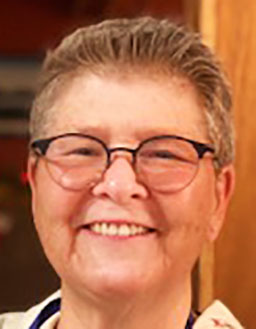
Skyline College has been my ‘home’ since 1990.  I knew I had hit the motherlode; I had found my dream job.  I still got butterflies walking across the campus after all those years, especially at the beginning of every new semester.  I couldn’t imagine being paid to do something I love.  I couldn’t imagine finding more engaging, intelligent, and passionate colleagues.  Teaching is a noble profession, and I was thrilled I was part of it.

I weathered many changes in the district over the years.  Five presidents, too many administrative changes to mention, a dramatically transforming student body, exciting new educational pedagogy evolving with the changing times, just to name a few.  What always kept me centered was my colleagues, my subject, and most of all the students who came through my classroom doors.

Perhaps I was naïve about our administration

Perhaps I was naïve.  Perhaps I was too complacent and kept quiet when I saw or heard the powers-that-be abuse those powers.  Perhaps I was too busy ensuring my students had all the tools and nurturing they needed to successfully navigate the complex highway of life.  Perhaps I was too trusting that those in power would do the right thing and put ‘students first’, which began to sound like a broken record.  I know I was naïve when I truly believed that our administration knew the definition of the word ‘transparency’.

The college’s mission “educating a global community of learners” also began to change.  There was little talk of how the community college is a place that offers students a place to discover not only new ideas, but also discover themselves.  I strongly believed that our colleges were for the entire community to participate in life-long learning.  Instead, our administration became data driven.  Enrollment and retention numbers; graduation and transfer numbers.   It wasn’t long before our college president at the time used their opening day message to gently chastise faculty that they weren’t doing enough “to get them in, get them through, and get them out.” I’d worked on an assembly line; educators do not work on an assembly line.  We were appalled.  Administration was obsessed with making themselves look good.  When the college president retired in spring 2019, the campus community hoped that we would have a reset when a new president came on board.

When COVID hit in March, 2020 the district went into lockdown.  Faculty scrambled to convert our face-to-face (F2F) classes to online within three days, learn Zoom and record videos.  We all struggled, but the feeling was one of camaraderie.  We were all in this together.  Looking back, faculty, staff, and the administration did a damn good job.

Board’s push for more in-person classes in Fall 2021 led to disaster

Our fall 2020 semester was remote.  Our enrollment decreased, as it did throughout the country.  Again, faculty and staff adjusted, improvised, and managed to keep putting ‘students first.’  We began spring 2021 remote, especially our general education courses.  We did not have vaccinations until early in the spring 2021 semester.   Although people began being vaccinated in spring of 2021, administration advised that we would continue to have most of our classes online in the fall.    Faculty and staff were pleased with that decision.  Administration advised that we use that semester to put in place COVID safety protocols; organizing class offerings and have a plan on how to reopen the campuses safely for spring 2022.   However, this was not to be.  In May, right before the end of spring semester 2021, the Board of Trustees, cheered on by the college administration, decided that we would offer more in-person classes in the fall 2021 semester.  Cases were dropping they said, more people were vaccinated they said, and the crusher… a famous amusement park was opening in southern California, why can’t we?

It didn’t matter that the course schedules were completed and students had begun registering for classes.  By early June, Delta struck.  Yet, the district did not change course.  We were going to offer more F2F classes, COVID be damned!  The ensuing weeks before the beginning of fall 2021 semester was an unmitigated disaster.  Leadership from above was absent or confusing, online classes that had students already enrolled were quickly converted to F2F.   This resulted in those F2F classes being cancelled because students did not feel safe to come back to campus.  These students had to find other online classes to take which meant rearranging their work and home schedules.  It also was difficult to find some required online classes still open.   Adjunct faculty found themselves without online classes to teach since they had been ‘convinced’ (bullied may be a better word) to convert.

District often disregarded faculty and staff Health and Safety reps

In their zeal to increase on-campus enrollment in fall 2021, the administration attempted to put together a COVID emergency response team.  Mixed messages, lack of transparency, and lack of clear policy re vaccinations, exemption rules, testing and quarantine policy resulted in pages and pages of incoherent rules and protocols.  Throughout the fall 2021 semester, the AFT and CSEA unions negotiated with the SMCCCD District, while Health and Safety Committee reps met weekly with administration, all to establish workable, clearly stated safety protocols before we began classes in spring 2022.  Often, faculty and staff suggestions were denied.

Requests for air purifiers have gone unanswered in some cases, or the response is usually the district mantra, ‘we are following required health protocols’, or ‘all our buildings have been passed for air filtration systems.’  That may be true.  However, would it be too much to ask that counselors who meet with many students during the day, often in windowless offices, have an extra safety measure?   The district has COVID money, and with the exorbitant salaries some administrators make, can’t we order some through Amazon?

Faculty and staff will continue to beg for proper safety protocols

Regardless of whether the San Mateo Public Health Dept. says it’s safe to end the indoor mask directive, couldn’t we as a district maintain a mask-directive indoors?  Social distancing is non-existent on a college campus.  Students mingle, they share lab space, they hug each other, offer their friends a taste of the latest Starbucks concoction, and in a split second they do not think of COVID.  We have some colleagues who are unvaccinated; shouldn’t those who are vaccinated feel assured that everyone still needs to wear a mask?  We have enough misinformation from social media.  Students as well as faculty and staff are still confused as to how best to navigate a positive COVID test.

My main concern is not the present.  We’ll muddle through.  We’ve been through worse and we’re still standing.  However, this virus in some variation will not disappear.  If we do not agree on some definitive, safe protocols for the future the district can kiss their enrollment increases goodbye.  Faculty and staff will continue to beg for proper safety protocols so we can be with our students.  Students first.  Isn’t that what education is all about?



February 2022 Advocate: CalSTRS divestment from fossil fuels

Should CalSTRS should divest from fossil fuels?
Attend a free online forum today from 4-6pm

Advocates of fossil fuel divestment are organizing for the first time to get the California State Teachers’ Retirement System (CalSTRS) to divest from fossil fuels. Sacramento State University’s College of Continuing Education Consensus and Collaboration Program will be hosting a free virtual Sustainability Symposium today (Wednesday, Feb. 9th) from 4:00-6:30 pm.


Speakers include:

  • Jagdeep Singh Bachher, University of California Chief Investment Officer
  • Keith D. Brown, President of the Oakland Education Association
  • Jane Vosberg, retired teacher, CalSTRS beneficiary and co-founder of Fossil Free California
  • Lizbeth Ibarra, 17-year-old climate justice organizer

Click here for more information

Click here to register to attend the forum

February 2022 Advocate: AFT continues organizing for safer campuses

Health & safety

AFT campus safety committee reps continue organizing for safer campuses

By Jessica Silver-Sharp, AFT 1493 Secretary and Skyline College Health, Safety & Emergency Preparedness Committee (HSEPC) Rep.

Our colleges held their first health and safety committee meetings of the semester by Zoom during January and February with many faculty members in attendance.

At each meeting, Covid Health Officer Ray Hernandez reported that Covid testing sites on each campus would be in place toward the end of February – a provision originally promised for the beginning of the Spring semester – and that home test kits for students and faculty that the Chancellor assured the Board of Trustees on January 11th would be available for Spring reopening, would arrive soon. Hernandez also noted that Virus Geeks had pulled out as our District’s contracted testing vendor, that this was a Chancellor’s office initiative that had failed, and that agreements with new vendors were in the works.

90 positive Covid cases reported by the District in January

While 90 positive covid cases have been reported by the District for the month of January, at none of these meetings was the District’s positive case count or Covid Exposure Report mentioned by leadership. As of February 7, the count for January stands at 52 cases at CSM, 29 cases at Skyline, and only 7 cases at Cañada. Faculty consider this to be an undercount as students continue to say they are unsure of how to report cases and receive scant email messaging about any health and safety provisions. At Skyline’s February 3 Health, Safety & Emergency Preparedness Committee (HSEPC) meeting, Hernandez assured attendees that positive cases were trending downward; in response, AFT faculty reps posted a link to New York Times Covid tracking showing that cases in San Mateo County remained “extremely high” with hospitalizations and deaths up significantly. Hernandez replied he would “take a look at that.”

Safety Committee reports

At the College of San Mateo Safety Committee’s January 27th meeting, whose membership includes only three faculty members, and with reported cases almost double Skyline’s case count, AFT’s rep. David Lau debated the adequacy of the number of KN95 masks to be made available and spoke out strongly about faculty’s concerns regarding other promised provisions.

At Skyline’s February 3 HSEPC meeting, AFT reps. Lori Slicton and Jessica Silver-Sharp responded to the District Safety Committee’s December 6th rejection (see meeting minutes item 48.1) of their approved recommendations for better health and safety features, like air purifiers on demand and up-to-date Covid reporting procedures, pointing out that lagging Covid reporting practices were out of compliance with AFT’s Spring MOU. AFT recommended further actions, detailed here. The meeting was contentious and unproductive, reflective of that campus’s continuing challenges to improve its campus climate and culture. Anticipating this, AFT’s President, Co-Vice President and Executive Secretary were all in attendance.

None of the health and safety committee meeting minutes or meeting recordings were available at the time of this writing, with Skyline committee’s website two months out of date. None of these participatory governance committees follow Robert’s Rules.

Cañada College’s Safety Committee meeting was held January 20th and will meet again February 17. A report from those meetings will be included in the next issue of the Advocate.

Faculty Participation Remains Essential

AFT continues to work for the health and safety of all faculty. Your participation can make a difference. If this information leaves you concerned, we hope you’ll contact your AFT reps. Additionally, the next round of campus safety committee meetings are scheduled:

  • Cañada College: February 17, 2:30-4:00pm. Zoom link
  • College of San Mateo: February 24, 2-3:30pm: Zoom link
  • Skyline College:  March 3, 12:45-2:05pm. Zoom link

As a reminder, your AFT representatives on these committees include the following:

  • Cañada College: Michael Hoffman, Lorraine Barrales-Ramirez
  • College of San Mateo: David Lau
  • Skyline College: Lori Slicton, Jessica Silver-Sharp

Anyone with questions or concerns should please contact your AFT Safety Committee reps or AFT Executive Secretary Marianne Kaletzky (kaletzky@aft1493.org)

February 2022 Advocate: Black History Month resources

Anti-racist education

Black History Month resources available from CFT

In observation of Black History Month, our statewide union, the California Federation of Teachers (CFT), has organized a collection of resources for educators, labor unionists, families and communities that highlight the work of Black educators and labor organizers and reflect on how we can advance the ongoing struggle for racial justice. Below are some examples of the resources provided:

Black workers, unions, and the labor movement (from the UC Berkeley Labor Center)

African American labor history guides, articles, books, and films including how unions have brought gains for workers of color, immigrants and women in California, the impact of the Great Recession on public employment, the job losses in the public sector due to the COVID-19 pandemic, and the ongoing fight for a decent minimum wage.

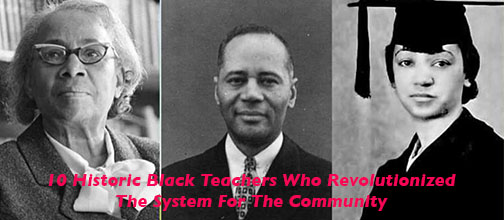
10 historic Black teachers who revolutionized the system


These educators, who fought white supremacy and helped change society, include Septima Poinsette Clark, who Martin Luther King, Jr. called the “Mother of the Movement for her work in literacy and for voting rights as well as to get Black teachers hired at universities. There’s also psychology professor Edmund Gordon, who founded the federal Head Start program and the Institute for Urban Education at Columbia University’s Teachers College, and Fanny Jackson Coppin, the first African American principal and school superintendent who advocated higher education for women.

2 books about Black workers, race and labor 

Black Freedom Fighters in Steel 
Ruth Needleman’s book tells the story of five black organizers, long-distance runners who were indispensable to building the steel workers union as well as the civil rights movement in northwest Indiana.


For Jobs and Freedom: Race and Labor in America since 1865
Robert H. Ziegler’s book analyzes the position of African American workers in the U.S. economy and social order over the past century and a half in this comprehensive study focusing on black workers’ efforts to gain equal rights in the workplace. It deals extensively with organized labor’s complex and tumultuous relationship with African Americans.


View all of CFT’s collection of Black History Month resources for educators and labor unionists here.