Monthly Archives: October 2021

SMCCCD COVID-19 EXPOSURES REPORT AVAILABLE

SMCCCD reports COVID-related cases in the District on their Covid-19 Exposures Report in the following two categories:

  • Confirmed positive cases of COVID-19 in individuals who were on SMCCCD property
  • Cases where an individual was on campus within the last work week and was required to isolate or quarantine due to possible COVID-19 exposure

View the District’s Health and Safety Plan here.

View other District Coronavirus (COVID-19) Information here.

October 2021 Advocate: Counselors Fight for Safe Return

Counseling Issues

As Skyline and Cañada counselors were asked to return to in-person work this fall, they called out unsafe conditions and inconsistent policies — and gained important improvements

by Katharine Harer & Rika Fabian, AFT 1493 Contract Action Team Chairs

Counseling faculty from Skyline and Cañada Colleges came to our AFT Contract Action Team (CAT) at the beginning of the fall semester with serious concerns about the way their divisions were handling their return to in-person work. They had checked with their colleagues at each of our three campuses and found that they were being presented with radically different requirements for return.  Of the three campuses, CSM had the most reasonable policy: counselors had the option of volunteering to work in-person, and those who didn’t make that choice could work from home.  Period.  No percentages, no forced return, no need to make special arrangements with the dean.  At Skyline and Cañada, however, it was a whole different story.

Counselors’ in-person work involves close contact with students
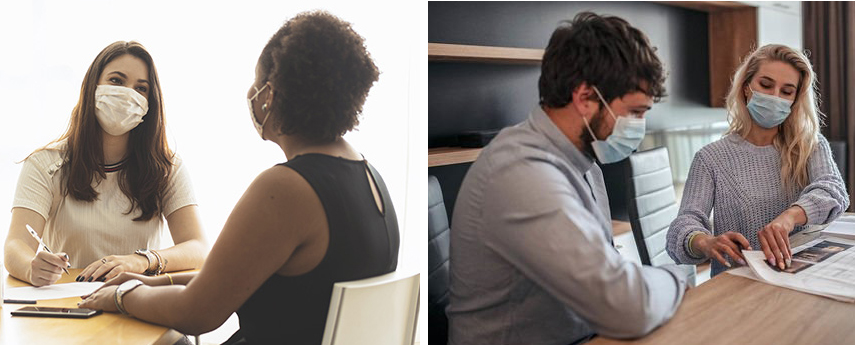
Most of us know this, but just as a reminder – counselors work one-to-one with students in very tight spaces to ensure confidentiality and trust.  The very nature of counselors’ work with students could put them in harm’s way.  Many students have opted for virtual counseling appointments for these same reasons: their exposure in close spaces.  Counselors’ work is essential not only in guiding our students to enroll in the right classes, but also in helping students with emotional issues—and issues of survival—that have become even graver in the Covid era.

Union helped publicize counselors’ issues and gain community support

Our Contract Action Team (CAT) strategized with counselors about how best to change the unfair policies being forced on faculty at Skyline and Cañada without their input.  We decided that a petition drive focused on their issues to be presented to the Board of Trustees and Chancellor Claire would help inform our campus communities about their unfair treatment and unite faculty in a show of support.  The drive was very successful — in less than a week over 300 instructional and non-instructional faculty members signed the petition.

Counselors show that faculty need to speak out for a safe return to campuses

Although the issues at Skyline and Cañada are still not completely resolved, counselors organizing together, speaking out and fighting back demonstrates that collective action can make a difference in our working conditions. Safety will be everyone’s concern when we return to our campuses in Spring. The counselors’ actions showed that unified voices of faculty are essential to urge the District to do their utmost to make our return safe.

We asked our counselor colleagues to write up their stories as they stand thus far. They describe their frustrations, and their victories, below.


Skyline counselors unite & win a temporary victory

At Skyline, counselors realized a few weeks into the semester that our process for electing to return for in-person services varied, depending on whether we were in general counseling or special programs. Some counselors seemed to have a simple opt-out option (to work remotely,) while others were held to a 25% quota of required in-person services for student services. This quota meant 25% of counselors would have to opt in (work in-person) and have no option to opt out unless they went through a formal process, and some counselors were asked by their supervisor to come in since they were on the bottom of the seniority list. Only 3 counselors out of 50+ counselors at Skyline actually volunteered to offer in-person services. However, in actuality a total of 16 counselors were slated to return in-person. Of those 16 counselors, we found that 13 of them weren’t given the option to opt out without an HR process, or they were asked to come in to help provide in-person services to meet the 25% requirement.

Meanwhile, counselors heard that Chancellor Claire was under the impression that all counselors at Skyline were volunteers, and if a counselor said they did not want to come in, they could simply just opt out.  Counselors began to realize that the process was unclear and inconsistent, and we began to check in with each other to discuss whether the process was equitable and how comfortable each of us felt being on campus. Additionally, we recognized a difference across the district when we found out that at CSM the process was completely voluntary and at Cañada their whole division was asked to come back in some hybrid format.

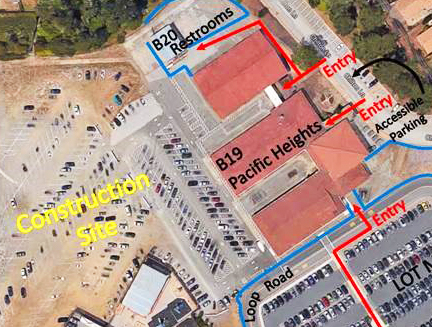
At that point, most counselors slated for in-person services had been on campus for at least one week. After nearly two weeks of some counselors being back on campus, those counselors began to realize that there were little to no safety policies and protocols in place for students, counselors, and staff. Furthermore, counselors at Skyline were moved to a “swing space” which meant all of our stuff was moved to the Pacific Heights building (photo at left), and we were given one day to unpack our belongings and get acquainted with the new space (which happens to be one of the oldest buildings on campus and, at the time, only had one functional single-use bathroom.) As a result of recognizing the differences across the district and the unsafe working conditions on campus, we began organizing with AFT’s Contract Action Team to put out a petition to support a safe and fair return to campus for counselors.  This petition was presented with 300+ signatures at the Board of Trustees Meeting on September 9, 2021.
Skyline counselors gain temporary “pause”

A week and a half after the BOT Meeting, our counseling division met to discuss the concerns and questions we had about our return this semester to in-person services, and we found that as a division, counselors had an array (150+) questions and concerns to bring forth. As a result, two counselors in our division brought this information to our dean and proposed there be a pause in services for counselors until safety protocols and procedures were identified for student, staff, and counselor safety. As a result of this request, our campus put a pause on in-person counseling appointments for fall 2021 to figure out how to address and remedy the issues that counselors have brought forth.

In my opinion, I think the reason we were able to get a pause of in-person services so quickly came as a result of a mass collective effort to advocate for fair and safe working conditions for our counselors. There was amazing camaraderie and organizing happening on the ground amongst counselors; there was support from the union, from the CAT Team and union President; there was support from faculty across the district (the petition included many instructional faculty’s signatures); and, as a division, we were able to present our concerns to our administration and they were willing to listen to us.

At the moment, in-person counseling services at Skyline remain paused temporarily. However, we have no clear timeline of when, or if, we’ll return for in-person services this fall. Our ultimate goal is to always serve our students, but we also need to serve our students in safe conditions, which is what we are advocating for overall. At this point, our division has three working groups:  a Hyflex working group, a Health & Safety & Process working group, and a Data work group.  We’ve set up these groups to ensure that our questions and concerns are addressed and we can return under conditions that are both fair and safe for students, staff, and faculty.

At this point, we are unsure what exact impact our work groups will have on the decisions about when, or whether, we will go back in-person for the fall semester. The current goal of our work groups is to work towards finding the answers to the questions our counseling colleagues have brought forth and to present proposals to administration that are equitable and provide for the safety and well-being of students, staff, and faculty when our return to in-person counseling resumes.

This report was written by a Skyline College counselor.


Cañada Counselors Push Back!

The past five months have been confusing and stressful for counselors in our district regarding the return to campus in Fall 2021. Throughout Spring 2021, counselors were told Fall 2021 would be remote for all faculty. Administrators were constantly saying our safety and health were a priority. However, two weeks before the end of Spring semester, the BOT began to discuss bringing counselors back based on an outdated student survey done in Feb 2021, before anyone knew about the Delta variant. In addition, the BOT was just starting to talk about Fall 2021 plans when the Spring 2021 semester was about to end and faculty were about to leave for summer break. In other words, faculty were not able to provide feedback about the return to campus at the district level. Although a few counselors did speak up at the BOT, not everyone was given a voice due to time constraints.

Over the summer, Cañada College counselors did not receive any updates regarding the return to on- campus work for fall 2021. Therefore, it came as a surprise when counselors were told during Flex Day that they were expected to return to campus by October 4th. Counselors were given two options: 1. Return to campus or 2. Work a Hybrid schedule (remote 1 or two days at most). In fact, the email sent to all Cañada counselors following that meeting clearly stated that all programs with a counseling component needed “to provide some in person counseling beginning in October.” Each counselor was then asked to choose a “plan” for fall 2021 (hybrid or in-person) by September 3rd. In order to stay remote for Fall 2021, faculty were told they either needed to have medical reasons and to work with HR or to work with the Dean regarding any non-medical reasons. Counselors were not invited to work with administration to come up with the plan, and we were given only a few minutes during the division meeting to discuss this plan or ask questions.

Counselors at Cañada subsequently learned that CSM’s policy gave counselors the option to volunteer to work on campus. Cañada College counselors were never given that option. At Skyline, counselors were told they needed to have 25% of counselors working on campus. In other words, each campus had a different plan for counselors to return. At Cañada, during a division meeting and at a student services meeting, we brought up our concerns and we also raised concerns about bathrooms for faculty, cleaning supplies for counselors, and the issue of windows that don’t open. To date, the Administration at Cañada has still not fully addressed these questions.

AFT supported counselors by creating a district-wide petition asking for consistent requirements for all three campuses and supporting counselors to not be required to return this semester until safety plans have been put in place. AFT’s Contract Action Team, working closely with counselors, was able to get more than 300 signatures from instructional and non-instructional faculty in support of the petition.  Counselors presented it to the Board of Trustees on September 9, 2021.

Some improvements but not enough

To make matters even more concerning, counselors learned that while the district is expecting us to return to campus this fall, this is before student proof of vaccination is required by the district. Students will not need to show proof of vaccination until the Spring 2022 semester. Therefore, it makes no sense to have counselors return to campus in Fall 2021 before proof of vaccination, or regular weekly testing, is set up for in-person appointments.

At a division meeting on September 28th, our Dean apologized for the deadlines but never mentioned the petition. He did say counselors can speak with him again if they want to change the plan, but not every faculty member feels comfortable speaking to their dean individually to disclose their personal situation in these challenging times. When he was asked directly, the dean would not agree that it was optional/voluntary to return to campus this semester.  Once again, there was very little time for counselors to discuss and ask questions during this meeting to provide feedback.

Bottom line: Faculty input is essential for safe return to in-person work

Recently, we have learned through talking to one another that Cañada counselors are now able to have the option to work remotely, but only after speaking with the Dean. This change in policy was never announced to counselors as a whole. As of now, we do have some counselors who are planning to work on campus this semester. But it feels as if the administration is not considering our safety and health as a priority. They are just in a rush to get counselors back on campus when, in fact, most of our students are asking for virtual appointments rather than in-person. There does not seem to be any compelling reason why counselors need to hold virtual appointments in their campus offices rather than in the safety of their homes at this time. To sum up, there has been no faculty input in creating the return to campus plan for counselors at Cañada College, and there continues to be a lack of consistency across the district for the return to in-person work for counselors.

This report was written by a Cañada College counselor in consultation with counselor colleagues

October 2021 Advocate: Health and safety concerns

Safe return to work

Health and safety concerns remain central as some faculty return to in-person work in Fall and most others prepare to return to campus in January

Recently our three campus health and safety committees held their latest round of monthly meetings. Many employees turned out to voice concerns aloud or in the chat, as did AFT’s representatives to each committee. Attendance was down from the summer numbers of 100+ employees per meeting, due probably to faculty workload and competing commitments. While administrators addressed some of the many questions posed by employees about current health and safety protocols and procedures, “this piece is in progress” was a common response. For answers, employees were also referred to the District’s newly expanded Return Information for Employees and Students websites.

At the most recent Cañada and Skyline College committee meetings, counseling faculty in particular voiced concerns about being asked to return to campus without the necessary policies in place to keep them safe. Lack of space, proximity to students for prolonged times, and lack of knowledge about students’ vaccination status were just some of their concerns, as Skyline and Cañada counselors have been pressured to return to work in the Fall, while CSM counselors have not. At the Cañada meeting, concerns were read aloud and shared in a document that was later merged with Senate concerns, and then administrators presented answers to the questions ahead of the campus town hall meeting of October 15. AFT believes strongly that the District must apply consistent policies to ensure both equity and safety for all students and employees.

During the committee meetings, it’s become evident that the District’s main priority is to stringently follow existing local and state laws, while faculty have urged the District to be more proactive, stressing that our district has the means go beyond the minimal requirements by hiring additional staff to monitor our public spaces, making N95 masks more readily available, and more. “Is it illegal for us to do more?,” asked one AFT rep.

Faculty questioned why the District has only just begun to implement our Board’s July 2021 COVID-19 Vaccination Requirement mandating that employees and students accessing campus be vaccinated, with no enforcement taking place as of this writing. That “self-attestation” and signage have been considered methods of enforcement has left many worried and others angry. Notably, an important minority of faculty members have also voiced their belief that, for a variety of reasons, the District should not mandate vaccinations at all (but generally support weekly testing for any unvaccinated staff or students). 

The Elephant(s) in the Room

To date, committee administrators have left many questions unanswered: How will the vaccination policy be enforced for faculty? Will there be an appeals process for those turned down for an exemption or accommodation? What will be the repercussions for unvaccinated faculty who are not granted an exemption or accommodation — and are thus unable to continue teaching online? Will Deans working with faculty move through the non-ADA accommodation process equitably and consistently, or will inconsistency rule the day (echoing class cancelations seen recently)? The health and safety committee administrators have been clear: these are “HR” issues, outside of the health and safety committees’ purview.

Each Committee is Unique

The tone of the recent Cañada and CSM Health and Safety Committee meetings, now chaired by VP’s of Administrative Services Ludmila Prisecar and Micaela Ochoa respectively, has remained collegial. The meetings are mostly concerned with hearing reports from health and safety personnel with as little as 5 to 10 minutes of “Round Table” time scheduled to hear feedback from committee members, and few actions taken.

At Skyline College, however, some safety personnel do not seem to have accepted the new role for the college safety committees as the primary place for staff to raise questions and concerns and provide feedback regarding working conditions under COVID. This expanded role was explicitly laid out by Chancellor Claire just before summer when the Emergency Operations Center (EOC) was disbanded. A number of Skyline College faculty have been attending and voicing concerns regularly, pointing out that in operating in the “business as usual” mode, the committee has not adapted to effectively prioritize employees’ concerns: Covid must be front and center in the committee’s deliberations. This has made for a more contentious meeting space. One manager at Skyline’s October 8 Health, Safety and Emergency Preparedness Committee (HSEPC) meeting stated:

“One thing that I was concerned about hearing earlier in the presentation is that I’m hearing a recurring theme: some people saying they don’t know who to report information to…All these people sitting on information, saying they don’t know where to go, I don’t get it…Everyone should be sharing information that they are concerned about and not wondering where to go with it. 

The other thing is… I heard an earlier request also, that this committee needs to work differently. I completely disagree. We’re working within the charge that we have. A lot of the information that’s coming out is not appropriate for this group. We are not a policy group. We are not going to become a policy group. I agree that a lot of this information should be shared with the Board of Trustees and other venues within the District, but I don’t think it serves anybody’s purpose to redesign the Health and Safety Committee to do things that we are not in charge or authorized to be doing.”

Also during this meeting, faculty learned that the universal indoor masking requirement that AFT worked to advocate for during summer may expire at the end of December, and that the District, like San Mateo County, could revert to requiring indoor masking for unvaccinated people only, which AFT has pointed out only serves to marginalize students and employees. Regarding social distancing, some faculty were surprised to learn that despite the increased contagiousness of the Delta virus, the District still uses the 6 feet for distance and 15 minutes for length of exposure as preconditions that would make it less likely that someone was exposed to enough virus to cause an infection. The CDC’s own website has adapted this information.

Skyline faculty propose improvements to safety committee processes

Many of the Skyline faculty who have been concerned about the committee’s lack of responsiveness to Covid issues met recently to draft a list of health and safety concerns and proposed improvements to the way the committee does business that they hope to see put into place.

At AFT’s October membership meeting, attendees formed groups by campus to recommend additional actions as well.

Participatory governance is our right! What can faculty do?

AFT will continue to work for the health and safety of all faculty. Your participation can make a difference.

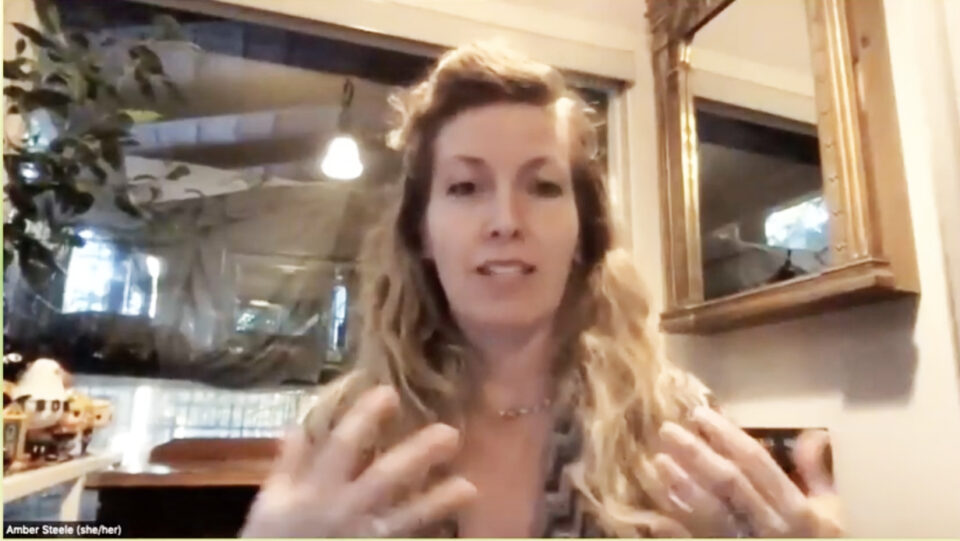
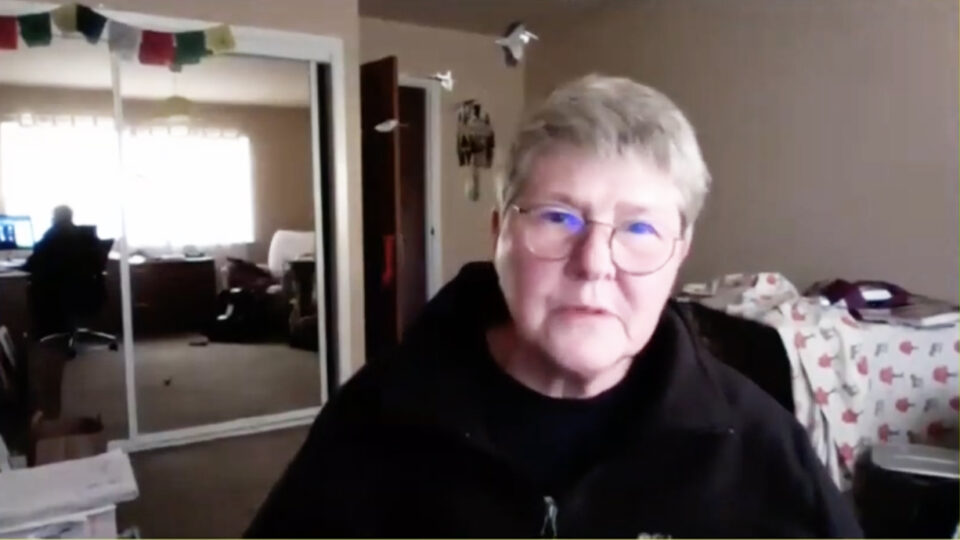
On October 13, Faculty members Amber Steele and Rosemary Bell (in photos above) spoke out about their health and safety concerns at the Board of Trustees. Other faculty may also raise additional issues about returning to work safely at the Oct 27th Board meeting.

  • Attend your upcoming campus Health & Safety Committee meetings
    • Cañada College – October 28, 11am-12:30 (new time) : Zoom link
    • College of San Mateo – October 28, 2pm-? :  Zoom link
    • Skyline College – revised time and date remain under consideration.
  • Contact your AFT Safety Committee reps with your concerns:
    • Cañada College: Michael Hoffman, Lorraine Barrales-Ramirez
    • College of San Mateo: David Lau, Jesenia Diaz
    • Skyline College: Lori Slicton, Jessica Silver-Sharp
  • Tell your campus safety committee chair(s) they must give sufficient time for our input and questions.
  • Attend Board of Trustees meetings to learn about the latest policies. Consider speaking out with your colleagues during the public comments on October 27.
  • Attend a Contract Action Team (CAT) meeting. The next meeting is October 20 at 4pm by Zoom

For recent coverage of this issue in the Advocate, also see “We are still in a pandemic” and “College Health & Safety Committees play central role in plans for return to safe in-person work

Links to Important Resources


October 2021 Advocate: Faculty evaluations of administrators

Evaluation of administrators

AFT presents results of faculty evaluations of administrators and continues to call for true “360 evaluations” of administrators

by Marianne Kaletzky, AFT 1493 Executive Secretary

This past spring, AFT 1493 launched an online survey to allow all faculty to evaluate the administrators they work with. As many faculty know too well, the current protocols for “360 evaluation” of administrators only allow a few, handpicked faculty and staff members to evaluate each administrator. Moreover, these “360 evaluations” are not anonymous, so faculty may refuse to participate due to fear of retaliation.

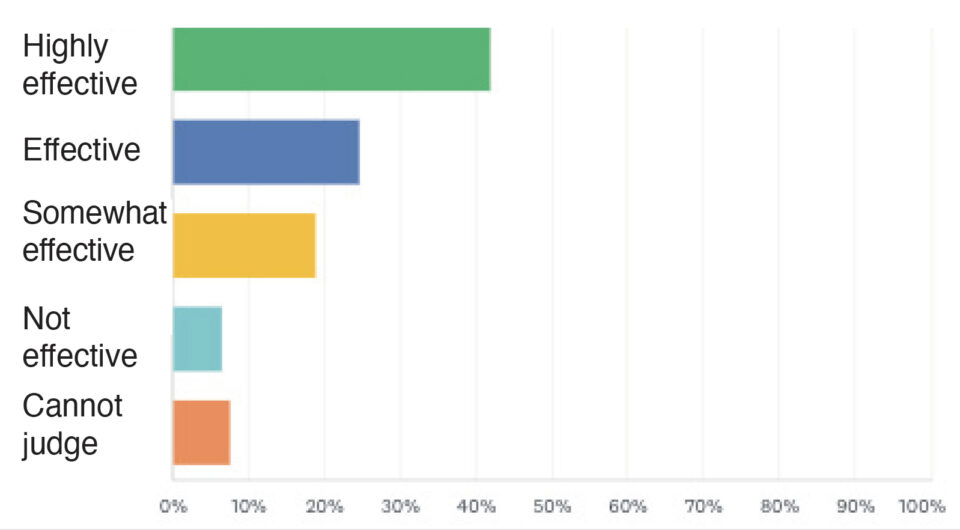
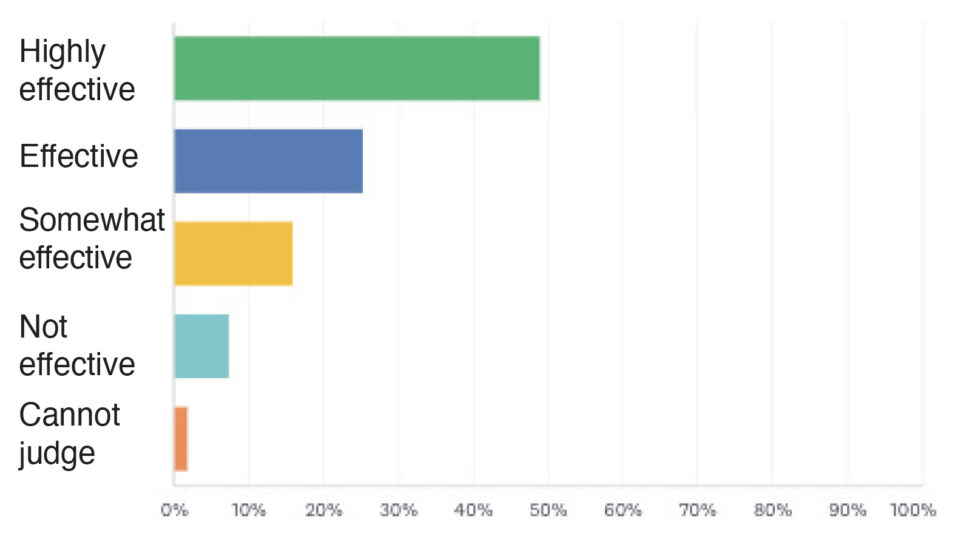
Faculty’s overall evaluation of deans’ effectiveness by college

Cañada College

CSM Skyline College

Evaluations by 320 faculty polled by AFT 1493 in Spring-Summer 2021

All faculty and staff should be able to anonymously evaluate their administrators

As a union, our position is that all faculty and staff should have the opportunity to evaluate their administrators—just as all students have the opportunity to evaluate faculty. Since the District has not instituted a true 360 evaluation process, we created one. On May 11, 2021, all faculty were sent a unique link allowing them to evaluate their dean, a college VP, their college President, and Chancellor Claire. Several reminders were subsequently sent. Ultimately, out of 926 invitees, 320 faculty participated in our evaluation process. Moving forward, AFT plans to present the data to Chancellor Claire so that he and his cabinet can share it with individual administrators. We will also request that our District adopt the tool we developed, or a similar one, that will allow all faculty and staff to participate in a true 360 evaluation of administrators.

Of these 320 faculty, 59% were full-time and 41% were part-time. The three colleges were all well represented, with 38% of responses from Skyline, 38% from CSM, and 24% from Cañada.

Most deans were rated were rated as “effective” or “highly effective”

In general, deans at all three colleges received fairly high ratings, with 47% of faculty describing their dean as “highly effective,” 24% describing their dean as “effective,” 17% describing their dean as “somewhat effective,” “8% describing their dean as “not effective,” and 4% saying that they could not judge. Faculty were asked a total of 22 questions about their deans. View the results for Cañada deans here, the results for CSM deans here, and the results for Skyline deans here. (Note: at this point AFT is only making public aggregate data for deans at each college, although we may share data regarding individual administrators in the future if the District is not responsive to our request to begin a true 360 evaluation process.)

Two deans were rated as more ineffective

However, there were exceptions to faculty’s generally positive evaluations of deans. On average, 74% of faculty who gave their dean a rating (as opposed to “cannot judge”) said their dean was either “highly effective” or “effective.” However, two deans—one at Cañada and one at Skyline—had fewer than 50% of ratings in the “highly effective” and “effective” categories. (For this count, we did not include deans who received fewer than 5 total ratings due to the small sample size in their cases.)

Ratings of Vice Presidents were lower

College vice presidents across the District generally received lower ratings than deans. 17% of respondents rated their VP as “highly effective”’ 22% rated their VP “effective”; 20% rated their VP “somewhat effective”; 26% rated their VP “not effective,” and 14% said they could not judge. Of faculty who gave their VP a rating, only 45% described the VP as “highly effective” or “somewhat effective.” Two individual VPs had more ratings in the “somewhat effective” and “not effective” categories than in the “highly effective” and “effective” categories.  View all results for District VPs.

Cabinet-level administrators’ ratings ranked between those of deans and VPs

Finally, cabinet-level administrators, including Kim Lopez (as the Interim President of CSM), Jamillah Moore (at the time President of Cañada), Skyline President Melissa Moreno, and Chancellor Mike Claire averaged ratings that fell between those of deans and those of VPs. 28% of respondents gave Cabinet-level administrators a rating of “highly effective,” with 30% giving them a rating of “effective,” 16% giving them a rating of “somewhat effective,” 16% giving them a rating of “not effective,” and 9% saying they could not judge.

64% of responses that rated cabinet-level administrators described them as “highly effective” or “effective.” However, one of these administrators was an outlier, receiving more ratings in the “somewhat effective” and “not effective” categories than in the “highly effective” and “effective” categories.  View all results for cabinet-level administrators.

Moving forward, AFT hopes to work with District administrators, Academic and Classified Senates, CSEA, and AFSCME to institute a process that allows all faculty and staff to evaluate the administrators they work with. We are also hopeful that administrators will act on the data we share with them to improve working conditions in our District.

October 2021 Advocate: Reflections on vision impairment, teaching & accessibility

Disability Awareness

Personal reflections on vision impairment, teaching & accessibility in SMCCCD

I don’t think I felt, really, shame about my disability. What I felt more was exclusion.”
– Judith Heumann from “Crip Camp: A Disability Revolution”  (more on “Crip Camp” video below)


by Lori Slicton, AFT 1493 ADA subcommittee member & AFT 1493 Skyline College Health, Safety and Emergency Preparedness Committee (HSEPC) Rep.

October is National Employment Disability Awareness Month. The following is a reflection on some of my challenges with vision impairment, teaching and accessibility at Skyline College.

Tears streamed down my face—but I wasn’t crying. With my right eye squeezed tight, I dragged my thumb across each letter on my computer screen. Unflinchingly, CurricuNet stared me down. The glare from the Enrollment Data Sheets floated on the computer screen in dark clouds. I blinked and blinked as though blinded by a camera flash. Why can’t I read these words? Am I so tired? Am I sick?

It was 2015 and I was working on Comprehensive Program Review (CPR.) Anthropology is a single person department and I, as always, was doing it on my own. It took everything I had and then some, to prepare CPR data on time and for the traditional presentation at Skyline College.

On the day of the presentation, Anthropology was up first. I was asked to set up for my presentation. I remember the President, Vice President, Deans and others look at me with surprise and disappointment when I said, “I don’t have Powerpoint slides to show you.  I’m going to need to do this ‘old school’.” The President and VP both looked at me and shook their heads. My heart sunk. I was nauseous and wanted to bolt out the door. I pulled it together, but not enough to do the presentation in a way the Anthropology program deserved. This experience was humiliating and remains with me today.

The following day on campus I was approached by faculty who I barely knew and who expressed regret that I had been “treated that way” by the President and VP. One person said they needed to “give me a hug after what happened.” Still other faculty had heard about it from others in attendance and offered their support. (Thank you colleagues!)

A challenging diagnosis

Fast forward: I was diagnosed with a rare, untreatable vision impairment. My doctor referred me to the Department of Rehabilitation (DOR) where I was assigned a counselor in Blind Field Services. The DOR promptly had workplace assessments scheduled and adaptive technology ordered. I needed training –and need more! Normally, the DOR makes recommendations for accommodations and the employer is to provide what’s necessary under the ADA. Our HR took nearly a full academic year to order some of the equipment necessary for my office. It took another four years (2015-2019) for HR to adapt my office ergonomically to make it accessible.

Eye disease affects millions of people. But describing vision loss is difficult. The photos above compare normal vision with one type of vision impairment (age-related macular degeneration) that is different from my condition. Click here to view examples of how different types of vision impairments impact vision.

Adaptive technology has made ordinary tasks possible and enjoyable—student papers can be read to me. I can listen to journal articles and review new texts. However, forms and programs remain a source of deep frustration.  I, like many people with vision impairment, memorize forms. Grades of Incomplete, Grade Change, Book Orders. Forms need to be updated but many changes are not an improvement—just different. CurricuNet, SPOL, Annual Program Plan (APP), Enrollment Data all take inaccessibility to a new level. We all work hard on these forms as they are required for our programs. Now that my vision is impaired, they take a phenomenal amount of time or are completely impossible. The APP program is inaccessible. So, with a dean’s approval and a colleague’s support, we created an alternative that would contain comparable information. There is no record of the Anthropology APP’s on the college website.

Next year, the Anthropology department is scheduled for CPR. My vision is worse and Curricunet remains the same. The Enrollment Data Sheets are brighter and there are many more of them. Despite feedback that these forms/programs are inaccessible, there have been no improvements for visually impaired employees.

A possible solution: More accessible forms

VPAT, Voluntary Product Accessibility Template may be a solution to some of these problems.

At its core, a Voluntary Product Accessibility Template (VPAT) is a template used by the US Federal and state governments and other entities as an assessment tool to evaluate how well digital content conforms to Web Content Accessibility Guidelines (WCAG) and Section 508 requirements.

Section 508 is an amendment to the Rehabilitation Act of 1973, which prohibits the Federal government office or vendor of the Federal government from discriminating on the basis of a disability. Digital product buyers inside and outside of government rely on these statements to “buy accessible.” A growing number of buyers consider accessibility an important factor in choosing a vendor. (Excerpeted from TGPi, a Vispero Company working for Accessibility for the Vision Impaired)

I’m optimistic. My experiences with Canvas Training, the CTTL and my peer mentor have been consistently been positive and constructive. When something is identified in Canvas as inaccessible, Canvas and the CTTL colleagues have been responsive. My peer mentor assists me with changes in the technology and identifying work-arounds when possible. Teaching online during Covid-19 has been a positive and supportive experience. It’s more comfortable and accommodating around my vision and ADA needs.


Crip Camp: A Disability Revolution

The excellent documentary film, Crip Camp: A Disability Revolution, is freely available to view here. This 2020 documentary has historic roots in the Bay Area and includes local activists, the longest sit-in, Black Panthers, the founding of the Center for Independent Living, and more. It also includes information on landmark legislation such as section 504 of the 1973 Rehabilitation Act and the ADA, which are critical to employee accommodations in the workplace.

Quotes from Crip Camp

“The ADA was a wonderful achievement. But it was only the tip of the iceberg. You can pass a law but until you can change society’s attitudes, that law won’t mean much.” – Denise Sherer Jacobson

If I have to feel thankful about an accessible bathroom, when am I ever gonna be equal in the community?” – Judith Huemann


AFT 1493: Building a foundation of advocacy and action around the ADA!

In recognition of National Employment Disability Awareness month, AFT 1493 would like to highlight a few of its accomplishments in 2020/2021.

  • Disability/ADA subcommittee to AFT 1493 to better identify and address faculty needs around accessibility and the ADA
  • Disability Issues and Accommodations faculty resource page on the AFT 1493 website. The page includes links for employee rights, information on requesting reasonable accommodations and the interactive process, among others
  • Direct faculty support in acquiring accommodations under the ADA.
  • Focused support and advocacy around Covid-19 and faculty needs for accommodations

We are here for you! If you need assistance with an issue related to accessibility and or disability, please contact Marianne Kaletzky, AFT 1493 Executive Secretary, at: kaletzky@aft1493.org or Lori Slicton, AFT 1493 ADA Subcommittee member and AFT 1493 Skyline College Health, Safety and Emergency Preparedness Committee (HSEPC) Representative, at: slicton@smccd.edu

– Lori Slicton